Apartment Roof and Plumbing Leaks|An Owner's First Response, Liability and Insurance
Kurihara (licensed real estate broker, 宅地建物取引士)PM Business
15 min read
When a tenant reports water dripping from the ceiling, the owner should secure the area and limit damage before waiting for an insurance decision. A roof defect and an upstairs plumbing failure require different repairs and cost treatment.
Restoration work, damage to tenants' belongings and rent reductions need separate records. This article explains response, liability and insurance using law and public guidance checked on 9 October 2026.
Key points
- Prioritise safety, water isolation and photographic and time records; determine cause and liability after investigation.
- Repairing a defect, insuring your building's water damage and compensating third parties are different matters.
- Assess rent reduction against the unusable area and period; no universal percentage or insurance payment can be promised.
First response to a leak report
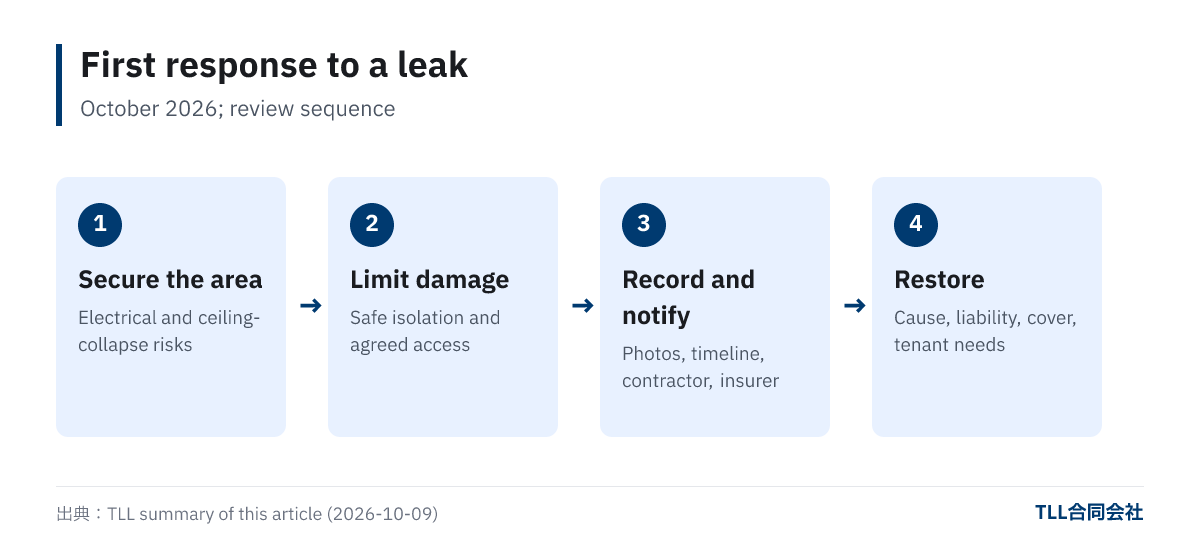
Ask occupants to leave areas at risk of electrical shock or ceiling collapse. Avoid touching wet electrical equipment, opening ceilings without expertise or accessing a roof in rain. Arrange the necessary work through qualified contractors.
Isolate water only where it can be done safely. Notify affected units before building-wide isolation and agree access with tenants. Do not attribute the cause to the upstairs flat before checking the pipe route.
- Move away from hazards and check the safety of occupants and the building.
- Safely isolate water and limit damage with collection and protective measures.
- Record discovery time, weather, water behaviour, photographs and communications; notify the contractor and insurer.
- Coordinate investigation, emergency work, permanent repairs and return to use.
Tell the insurer promptly why emergency work is necessary and what it covers. Removing everything before investigation can obscure the cause. Proceed with necessary safety measures while preserving pre-removal photographs and records of replaced components.

How are owner and tenant responsibilities separated?
A landlord generally has a duty to make repairs necessary for use and enjoyment. The Civil Code treats repairs differently where the need arises from a cause attributable to the tenant. Assess the cause, contract and fault before allocating costs (Civil Code lease provisions).
Roof, wall and ageing shared-pipe defects commonly require building-side repair assessment. A detached washing-machine hose calls for investigation of installation and use. Do not assign responsibility to the upstairs resident before the cause is established.
MLIT's restoration Q&A notes possible tenant liability where failure to report a leak allows damage to spread. The recipient of a report should also document investigation arrangements and action.
The duty to repair and liability for damages are separate. A need for repair does not automatically mean all belongings or hotel costs must be compensated. Document causation and necessity, then review claims with the insurer or a lawyer.
Which costs belong to fire and liability insurance?
Cover for your own building and cover for legal liability to others serve different purposes. Also distinguish plumbing-related water damage from flooding under Japanese policy categories.
| Loss or cost | Cover to check | Key issue |
|---|---|---|
| Water-damaged building finishes | Building fire policy and water-damage cover | Cause, insured property and excess |
| Failed pipes or aged waterproofing | Equipment cover, endorsements or owner funding | The defective component may be excluded |
| Tenant or neighbour property | Premises or rental-building liability | Legal liability, event and insured premises |
| Tenant belongings | Tenant contents insurance may also apply | Insured property and liability |
| Lost rent or temporary expenses | Rental-income or other endorsements | Whether included and payment conditions |
The General Insurance Association of Japan explains that plumbing-related water-damage cover depends on the contract. The insurer's coverage guidance also distinguishes water damage and flooding.
Cover for a damaged ceiling does not necessarily pay to replace an aged pipe or renew waterproofing. Direct rain ingress, deterioration and leakage following storm damage can be treated differently. Compare the cause report with the policy.
Premises liability can cover legal liability arising from defects or management failures (Mitsui Sumitomo Insurance guidance). Check plumbing-event exclusions, endorsements and the insured premises for the specific product. Discuss settlement or payment commitments with the insurer first.

Rent and tenant arrangements while rooms are unusable
Where part of the premises becomes unusable for a cause not attributable to the tenant, the Civil Code provides for a corresponding rent reduction. Establish the actual unusable area and period.
The impact differs between an unusable bedroom, unavailable washing facilities and danger throughout the unit. Record not only when water stopped but when drying and mould treatment allowed normal use again. Assess relocation or hotel claims for necessity and connection to the incident.
Nearby asking rents help illustrate the financial scale. They are not statutory reduction rates or insurance-payment benchmarks.
| Station | Listings | Median monthly asking rent |
|---|---|---|
| Akabane | 29 | JPY 98,000 |
| Takadanobaba | 31 | JPY 138,000 |
| Nerima | 31 | JPY 104,000 |
Source: Urbalytics rent_stats, Tokyo MANSION category (including apartment units), 25–40 sqm, advertised during 1–30 September 2026; retrieved 9 October 2026. Duplicates and defined outliers are excluded. These are asking rents; age, walking distance and equipment are not matched.
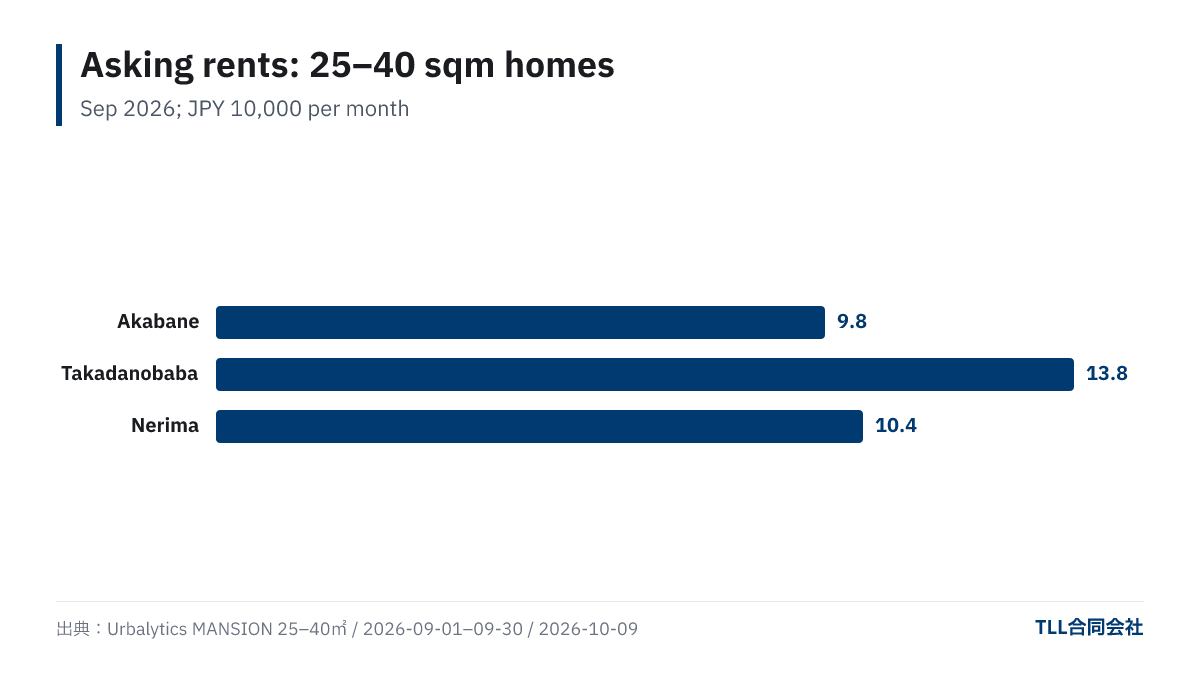
Using Takadanobaba's JPY 138,000 monthly median, a hypothetical 30-day month, 10 unusable days and a 20% reduction produces JPY 9,200 (138,000 × 10/30 × 0.20). The days and percentage are illustrative assumptions, not fixed legal standards. Use the contractual rent and established facts for a real case.
Give tenants specific repair appointments, usable areas and the time of the next update. Keep rent and belongings claims distinct, with separate evidence, to support later settlement.
Records and prevention after restoration
A dry surface alone does not establish completion. Ask the contractor whether the cause has been removed and whether hidden areas need drying or mould treatment.
Keep cause reports, emergency work and permanent-work estimates and invoices separately. Support belongings claims with photos and purchase dates rather than mixing them into building work. Track insurer requests and unresolved questions, and avoid budgeting unconfirmed insurance proceeds as income.
Use MLIT's planned-repair guide and our major apartment repairs article to review roof, wall and plumbing renewal. Integrate incident repairs into longer-term plans to avoid repeated temporary fixes.
Agree night contacts, contractor-ordering authority, emergency cost approval and the insurance contact between owner and manager. Treat move-out cost allocation separately, as explained in landlord and tenant restoration costs.
Frequently asked questions
Q. Will fire insurance repair a roof leak?
It depends on the cause and policy. Ageing waterproofing may be excluded; separate defect repair from consequential damage.
Q. Must the owner pay for all tenant belongings?
Not automatically. Investigate causation and legal liability, and review contents and liability cover.
Q. Should repairs wait for the insurer's inspection?
Proceed with necessary safety and damage-limitation work. Notify the insurer and preserve pre-removal photos and work records.
Q. What percentage of rent should be reduced?
There is no universal percentage. Establish the unusable area, period and practical impact, then use contractual rent.
Summary
- Secure the area, isolate water safely, record and investigate.
- Separate repair duties from damages liability and building cover from third-party cover.
- Assess rent reduction from actual loss of use.
- Preserve cause and repair records and reflect them in equipment and management plans.
References: Civil Code, MLIT, General Insurance Association of Japan, Mitsui Sumitomo Insurance public material and Urbalytics. Checked 9 October 2026; policy-specific terms determine cover.
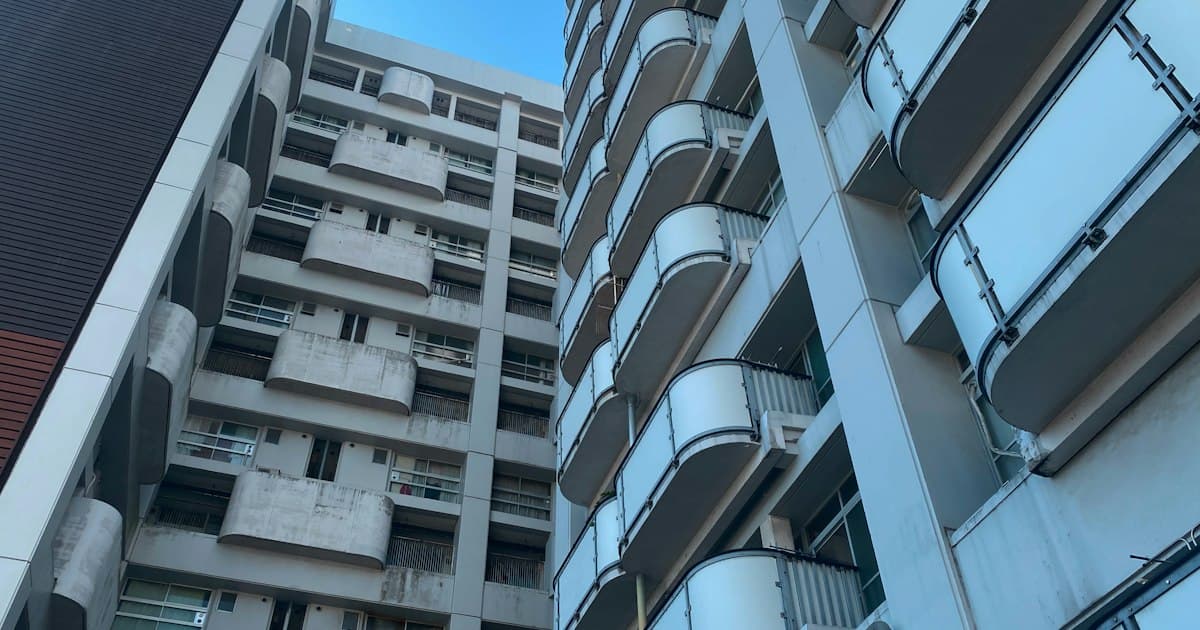
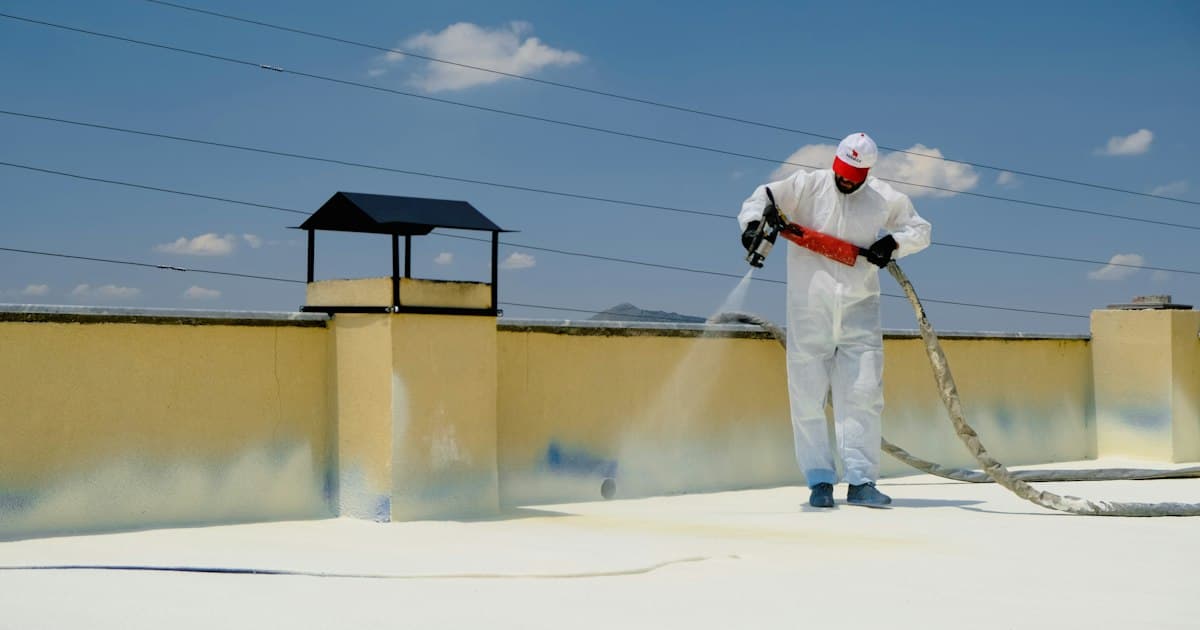
Cover image (illustrative): Photo: Ömer Haktan Bulut / Unsplash
About this article
- Author
- Kurihara(PM Business)Qualifications: Real Estate Transaction Specialist, FP Level 2, Chief Property Manager, Rental Real Estate Management Specialist
Handles owner relations, repairs and contract administration, drawing on practical experience in both rental and condominium management. He has more than ten years of property management experience, including work at Nippon Kanzai Housing Management. His background covers owner and tenant relations, lease administration, repair coordination, and condominium board and owners' meetings. His qualifications include Japan's Real Estate Transaction Specialist, Chief Property Manager and Rental Real Estate Management Specialist. He focuses on balancing day-to-day responses with preparations for long-term ownership. His articles explain management-company handovers, responsibility for restoration costs, major repairs and equipment replacement. He makes these practical issues easier to understand so owners can weigh cost, necessity and timing.
View profile → - Publisher
- TLL合同会社宅地建物取引業 東京都知事(1)第108202号住宅宿泊管理業 国土交通大臣(01)第F03424号
Data in this article cite their source and as-of date. Market conditions and regulations change, so check the latest information and consult a professional before deciding. Translated from the Japanese original.