Switching from Minpaku to Licensed Simple Lodging|Options and Requirements as Operating-Day Rules Tighten
Takanobu EzakiAccommodation Business Manager
13 min read
When minpaku operating days are restricted, a Hotel Business Act licence may become an option. Changing the existing private-lodging notification does not convert a home into licensed simple lodging. Check whether the location and building qualify, and whether the converted business is viable.
Areas reviewing minpaku restrictions may also change their lodging rules. This article examines feasibility, costs and sequencing using official information checked on 9 October 2026.
Key points
- Minpaku has a 180-day annual cap; simple lodging requires a separate Hotel Business Act licence.
- Shinjuku's September 2026 proposals also address licensed lodging and must be distinguished from rules already in force.
- Check permits, conversion costs and downtime expenses, and compare a long-term-rental fallback on the same cash-flow basis.
How do minpaku and licensed lodging differ?
Private lodging is a notification system for qualifying housing. Simple lodging is a licensing system under the Hotel Business Act. The Tourism Agency explains the annual cap and local period restrictions in its minpaku guidance, and facility-specific licensing in its Hotel Business Act guidance.
| Item | Private lodging | Licensed simple lodging |
|---|---|---|
| Procedure | Private-lodging notification | Hotel Business Act licence |
| Building | Qualifying housing requirements | Lodging, building and fire standards |
| Location | Local operating-area and period rules | Zoning, facility layout and management rules |
| Management | Required outsourcing in relevant absence cases | Management meeting licensing conditions |
Licensed lodging does not have the same statutory 180-day minpaku cap, but calculating that benefit is pointless where a licence cannot be obtained. Special-zone minpaku has a separate certification system, and an existing notification number cannot be reused for it.
Changing the notified operator does not restart the operating-day count for the same home. Clarify the intended system before assessing the building.

Reading Shinjuku's proposals alongside current rules
Shinjuku's September 2026 announcement concerns proposed ordinance changes. Separate applicable provisions from possible future requirements.
The ward proposed generally prohibiting new minpaku in residential zones and limiting commercial-zone operations to 120 days annually. It also proposed restrictions on new small lodging facilities (8 September 2026 mayoral briefing).
Check the latest ordinances, effective dates, transitional provisions and treatment of applications. The announcement alone does not establish that a facility is already unable to operate, or that an application made now is certain to succeed. Compare the current private-lodging rules with amendment materials.
Check the verification date and subsequent changes when reading our Shinjuku article. The 23-ward overview provides broader context.
Which buildings can be converted?
Operating lawfully as minpaku does not prove eligibility for a lodging licence. Check zoning and building use, and record the health, fire and building requirements on one set of plans.
Review rooms, toilets, washbasins, bathing facilities, reception or staff space, ventilation, daylight and evacuation routes. Disclose discrepancies between notified plans and the actual building. Nerima's guidance also requires planning consultations with the relevant departments.
For leased premises, verify that consent for housing or minpaku extends to licensed lodging. Check condominium bylaws separately. The lease must permit the intended use, equipment, signage and works, with responsibility for costs agreed.
Exemption from a change-of-use confirmation procedure does not remove compliance duties (MLIT guidance). Confirm procedures triggered by the proposed works with an architect and building authority.
Compare conversion costs with long-term rental
Subtract additional costs from additional revenue to test investment recovery. More legal operating days do not mean every day will sell.
Include design and applications, fire equipment, fit-out, reception equipment, staffing, supplies and insurance changes. Rent or debt payments may continue through works, so include fixed downtime costs and booking refunds.
Residential asking rents provide a reference for reverting to long-term rental. The following data are not nightly accommodation rates.
| Station | Listings | Median monthly asking rent |
|---|---|---|
| Akabane | 29 | JPY 98,000 |
| Takadanobaba | 31 | JPY 138,000 |
| Nerima | 31 | JPY 104,000 |
Source: Urbalytics rent_stats, Tokyo MANSION category (including apartment units), 25–40 sqm, advertised during 1–30 September 2026; retrieved 9 October 2026. Duplicates and defined outliers are excluded. These are asking rents; age, walking distance and equipment are not matched.
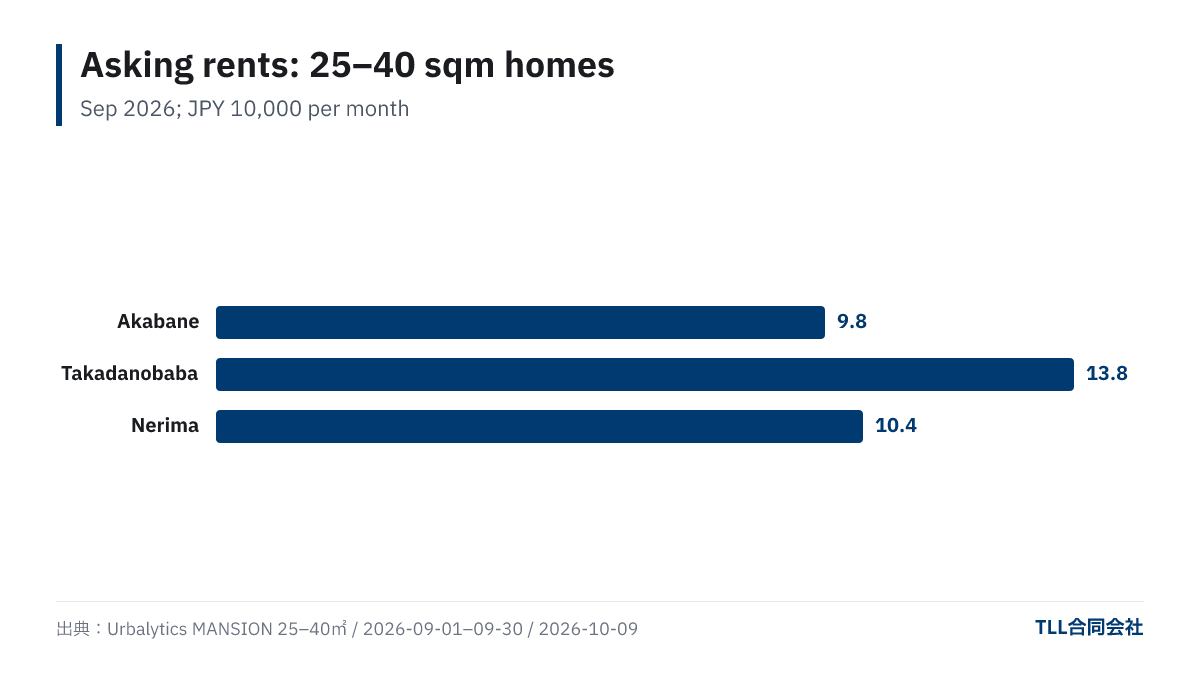
For example, multiplying Takadanobaba's JPY 138,000 monthly median by 12 produces JPY 1,656,000 annually. This illustration excludes vacancy and expenses, is not whole-building rent and does not establish achievable rent for the subject unit. Adjust for its area, equipment and terms, then allow for vacancies and letting costs.
For lodging, separate saleable days from occupancy and test lower occupancy, higher staffing costs and licensing delays. For rental-management costs and workload, see self-management versus outsourced management.

Steps for switching to licensed lodging
Plan approvals and existing bookings together. Closing the minpaku business before testing licensing feasibility can prolong the period without revenue.
- Check the address, zoning, current ordinances and building condition.
- Present the same plans to health, building and fire departments and list required work and documents.
- Finalise estimates and staffing, then coordinate neighbourhood notices, works, applications and inspections.
- After approval, set the opening date and coordinate the minpaku closure filing, booking platforms, insurance and management contracts.
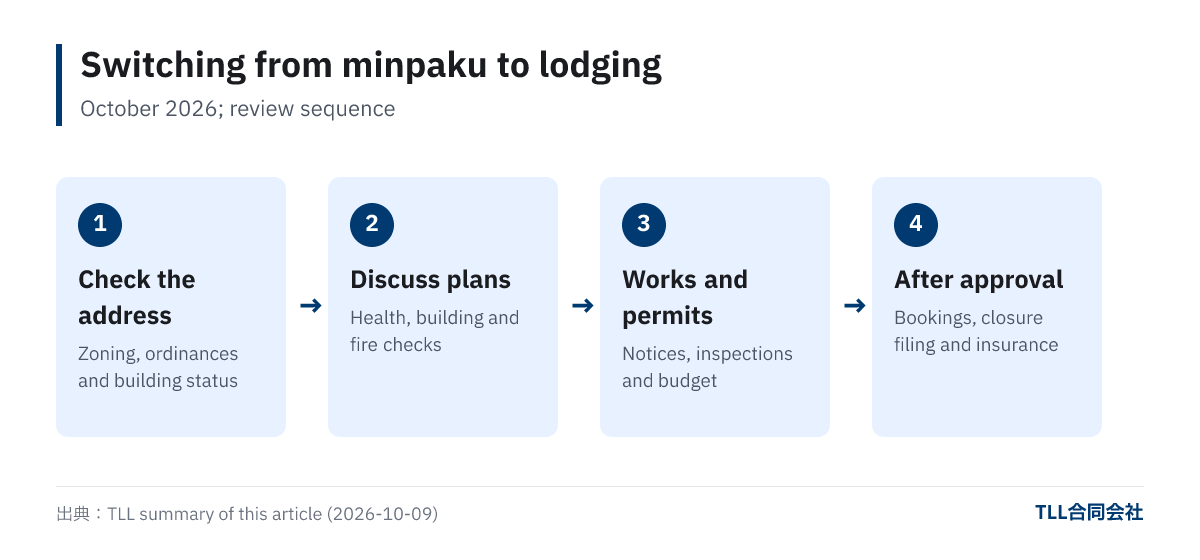
Confirm the order of closure and licensing procedures with the authority. Check platform rules for moving bookings and avoid selling unlicensed dates as Hotel Business Act operations.
If conversion is unviable, compare revised minpaku operations, long-term rental and sale. Past conversion spending alone is not a reason to invest more; compare future costs and prospective income.
Frequently asked questions
Q. Does changing a minpaku notification create a simple-lodging licence?
No. A separate licence and compliance with building, fire and local standards are required.
Q. Does switching avoid Shinjuku's restrictions?
Not necessarily. The September 2026 proposals also cover licensed lodging. Review current rules and amendment details.
Q. How much will conversion cost?
It depends on the building and licensing requirements. Obtain design, fire and construction estimates after plan-based consultation.
Q. When should the minpaku business be closed?
Confirm its relationship to the application, approval and opening dates with the authority, while arranging existing bookings and refunds.
Summary
- The 180-day notification system and lodging licensing are separate.
- Monitor proposals affecting both minpaku and licensed lodging.
- Include works and downtime costs when comparing a rental fallback.
- Coordinate permits, bookings, closure filings and insurance in one timetable.
References: Tourism Agency, MLIT, Shinjuku and Nerima official sources linked above, and Urbalytics. Checked 9 October 2026.
Cover image (illustrative): Photo: Dorothy Kuromi / Unsplash
About this article
- Author
- Takanobu Ezaki(Accommodation Business Manager)Qualifications: Type A Fire Prevention Manager, Type 1 Health Officer, Hazardous Materials Engineer, Class B-4, Class 2 Boiler Engineer
Leads accommodation projects from pre-opening preparation to stable operations, bringing together permits, refurbishment and operating budgets. He has held manager, general manager and director roles at hotels, ryokan and golf courses over more than 30 years. His experience includes facility operations, P&L management, liaison with authorities, obtaining permits and major refurbishment, from opening new glamping facilities to repositioning existing ryokan. At TLL, he oversees accommodation operations and prepares new properties for opening. For each property, he brings together the applicable operating framework, facility requirements and staffing arrangements to develop a workable operating plan. His articles explain the differences between minpaku and hotel-business requirements across Tokyo's 23 wards and the implications of different operating models. His qualifications include Type A Fire Prevention Manager and Type 1 Health Officer.
View profile → - Publisher
- TLL合同会社宅地建物取引業 東京都知事(1)第108202号住宅宿泊管理業 国土交通大臣(01)第F03424号
Data in this article cite their source and as-of date. Market conditions and regulations change, so check the latest information and consult a professional before deciding. Translated from the Japanese original.