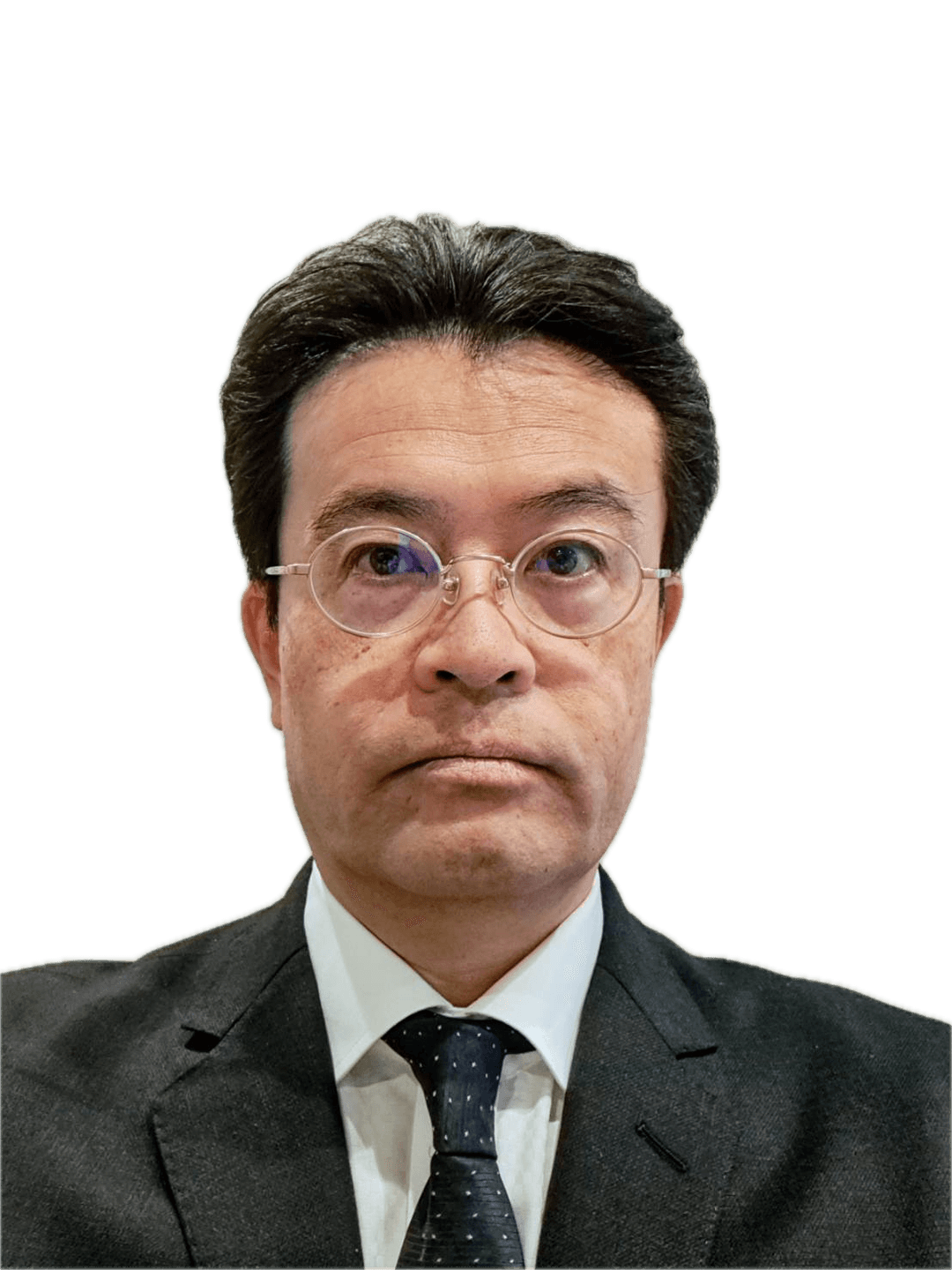
Takanobu Ezaki

Takanobu Ezaki

Accommodation Business Manager

Has held the posts of manager, general manager, and director at hotels, ryokan, and golf courses across more than 30 years, taking charge of overall facility operations along with P&L management, liaison with government authorities, licensing and permits, and large-scale renovation projects.

Overview

Work spans launching new glamping facilities through to repositioning existing ryokan, consistently covering everything from pre-opening preparation to stabilizing operations. At TLL, oversees accommodation business operations and leads pre-opening preparation for new properties.

Experience & education

Professional Experience

snow peak glamping Tokushima Komatsushima - Facility Manager

Izu Hotel Resort & Spa - Manager

Hotel Forest Hills Nasu - Manager

Education

Hakuoh University - Faculty of LawDepartment of Law

Certification

Type A Fire Prevention Manager

Type 1 Health Officer

Hazardous Materials Engineer, Class B-4

Class 2 Boiler Engineer

TLL Columns

Articles on Urbalytics

After Shinjuku Moves Minpaku Out of Residential Districts: Tokyo’s 23‑Ward Minpaku Map Is Being Redrawn, One Ward at a Time

After Shinjuku Moves Minpaku Out of Residential Districts: Tokyo’s 23‑Ward Minpaku Map Is Being Redrawn, One Ward at a Time

Shinjuku Ward plans to require about 2,000 minpaku in residential zones to exit. From here on, the value of a Tokyo minpaku asset is judged first by ward and use district (用途地域), then by yield.In recent years, “buy a compact unit in Tokyo for minpaku” became the standard play for cross-border investors: hotel rates were elevated, inbound visitors kept rising, and minpaku income appeared well above long-term leases.But in September 2026, Shinjuku—the municipality with the most minpaku registrations nationwide—proposed a notably hardline ordinance revision. It doesn’t raise the bar; it would directly move minpaku out of residential districts.A September 27 Kenbiya architect column put this into a wider frame: the 23 wards’ stance on minpaku is diverging, and what really decides whether an asset can continue operating is no longer just ward ordinances, but also building regulations.I. Shinjuku’s proposal: residential zones to zero, one‑third cut in commercial zonesAs of end‑August 2026, Shinjuku’s Residential Lodging Business (住宅宿泊事業; minpaku) registrations totaled 3,928, the most among all municipalities in Japan. Garbage disposal, late‑night noise, and disputes over use of common areas are the immediate reasons behind the ward’s push to amend the rules.Under the ward’s stated direction, new minpaku would in principle be prohibited in exclusive residential use districts and educational districts; commercial districts would remain allowed, but the annual cap on operating days would drop from 180 to 120 days, concentrated mainly in spring, summer, and winter breaks.More importantly, existing operators are also covered. Reports indicate roughly 2,000 minpaku in residential zones may be unable to continue operating—more than half of the ward’s current registrations.The timeline is largely clear: public comments start in October 2026; a revision bill goes to the ward assembly in February 2027; target enforcement in June 2027. Nikkei reports that existing facilities will get about a two‑year transition, with the same restrictions applying from June 2029.The ward also left a narrow exception: for owner‑occupied homestays (家主居住型) where the owner co‑resides and can handle complaints immediately, special treatment is under study. The ward mayor also noted litigation risk, emphasizing the aim is to strengthen management and protect the residential environment, not to reject minpaku itself.Apartment blocks along Ōkubo‑dori in the Kitashinjuku area; Shinjuku’s minpaku registrations are heavily concentrated in these mixed‑use stripsII. Within the 23 wards, three approachesShinjuku’s move is enabled by national‑level latitude. In July 2026, the Japan Tourism Agency indicated that where residential or educational environments could be harmed, municipalities may, via ordinance, effectively reduce minpaku operating days to zero and may require existing facilities to install noise meters, surveillance cameras, and other management tools.This means the Residential Lodging Business Act’s original “nationwide 180 days” framework is morphing into “each ward sets its own rules.” The Kenbiya column points to at least three different directions across the 23 wards.Shinjuku represents the regulation‑tightening model: in wards with concentrated tourism and explicit resident complaints, authorities will prioritize residential function, drawing no‑go areas via use districts.Itabashi Ward is the conditions‑easing model. The ward has long applied supplemental rules to exclusive residential districts, restricting operations from Sunday noon to Friday noon; but owner‑occupied operators and others who can respond to complaints immediately are exempt from this restriction. In other words, Itabashi regulates “who manages,” not only “where it operates.”Happy Road Oyama shopping street in Itabashi; the ward applies weekday restrictions in exclusive residential districts, with exemptions for owner‑occupied operationsSetagaya Ward takes a third path: it has set up a council to review the Hotel Business Act (旅館業法) and the Residential Lodging Business Act together; a draft ordinance revision is still under discussion, oriented toward community coexistence.Viewed together, the conclusion is straightforward: within Tokyo’s 23 wards, whether an asset can operate as minpaku—and for how many days—now depends on which ward and which use district (用途地域) it sits in.The Taishidō area near Sangenjaya Station in Setagaya; the ward is reviewing and integrating its Hotel Business and Residential Lodging ordinancesIII. The real hurdle is building law: the May 28 noticeMany investors’ first reaction is: if the Residential Lodging Business is constrained, switch to a Hotel Business Act license and operate a simple lodging (簡易宿所) year‑round. That path exists, but the bar was raised in May 2026.On May 28, the Ministry of Health, Labour and Welfare and the Ministry of Land, Infrastructure, Transport and Tourism issued a joint notice requiring local health departments, when issuing Hotel Business Act permits, to thoroughly confirm compliance with the Building Standards Act (建築基準法). If a detached house or apartment building is converted to lodging use and the total area of the change of use exceeds 200 square meters, a confirmation application (確認申請) is required.The most misread point has been the under‑200 square meter case. While the confirmation application can be exempted, the obligation to comply with the Building Standards Act has never been waived. The notice states clearly: even under 200 square meters, you must submit a compliance opinion from a licensed architect.For investors buying second‑hand detached homes to run minpaku, this is a cost that was often overlooked. Egress routes, emergency lighting, stair widths, fire safety equipment, road‑frontage requirements, and unpermitted additions—any nonconformity requires remediation; older properties lacking a completion inspection certificate (検査済証) may not be able to obtain the opinion at all.IV. Break‑even under a 120‑day cap: how Urbalytics data readsThe impact of cutting the cap from 180 to 120 days is not linear. Using Urbalytics platform rental listing data for a rough cut: around Shin‑Ōkubo Station, average asking rent for apartments is about JPY 138,600 per month, with an average floor area of roughly 30.7 square meters—about JPY 1.66 million per year on a long‑term lease.Assuming cleaning, platform commissions, property management, and other costs total 45% of revenue, to match the net income of a long‑term lease you would need roughly JPY 16,800 per night under a 180‑day cap; with a 120‑day cap, the hurdle rises to about JPY 25,200. And that assumes every allowed night is booked.In other words, for the same unit, simply shortening the cap by one‑third lifts the break‑even purchase price by about 50%. For assets priced on “minpaku income far above long‑term rent,” once that line is pushed higher, the numbers may stop working.On the sales side, Urbalytics one‑building investment listing data show median listing yields of 4.10% (n=49) around Shin‑Ōkubo, 4.50% (n=81) around Takadanobaba, 4.11% (n=135) around Sangenjaya, and 5.21% (n=97) around Ōyama in Itabashi Ward.Median listing yields for one‑building assets and median rent per square meter for rental apartments across four Tokyo station areasUrbalytics Insight Shin‑Ōkubo’s median rent per square meter of JPY 4,680/sq m is the highest among the four, yet one‑building listing yields are only 4.10%, indicating that pricing already embeds a mixed‑use location premium; after the exit of residential‑zone minpaku, that premium needs to be re‑tested.Note: these listing samples are mainly small‑to‑mid‑scale one‑building assets and include properties in commercial zones; they cannot be taken as a direct “minpaku premium” and are better used directionally. You can view Shinjuku Ward’s rental apartment rent distribution in Urbalytics’ Shinjuku Ward Rental Apartment Market Report.By contrast, Itabashi Ward’s yields are visibly higher, with rent per square meter around JPY 3,809. For investors willing to live in the building and operate as owner‑occupied, the price bands in the Itabashi Ward One‑Building Investment Market Report may warrant closer attention than Shinjuku.V. How investors should respondInternational precedent suggests this tightening may not be short‑lived. Barcelona plans to let roughly 10,000 tourist‑housing permits lapse by November 2028; after New York implemented a short‑term rental registration regime in 2023, active listings fell from about 22,000 to around 2,000.Tokyo will not copy these cities wholesale, but the direction is similar: in housing‑constrained, rent‑inflation cities, minpaku is increasingly managed as part of housing policy. For investors already holding or considering acquisition, three checks are worth making first:First, check the use district (用途地域) and the ward’s ordinance before you run the yield. Two sides of the same street may fall into a commercial district versus an exclusive residential district—with entirely different outcomes.Second, confirm whether you can switch operating models. If the Residential Lodging Business is constrained, the ability to pivot to a Hotel Business Act permit depends on area, building compliance, and the completion inspection certificate; ideally commission a preliminary compliance screen by a licensed architect before purchase.Third, prepare your fallback. If minpaku doesn’t work, can you revert to conventional long‑term rental, monthly serviced apartment, or office use? Will the post‑switch rent support your basis? That is the true floor for this asset type.Risk warning Shinjuku’s proposal remains subject to public comments and ward assembly deliberation; details may change. But if other wards follow, residential‑zone assets priced on minpaku income may face a double discount in valuation and liquidity.Rather than “the end of minpaku,” Shinjuku’s proposal is a reclassification: assets that can continue under evolving rules—or convert back smoothly to residential—will retain value; prices supported only by 180‑day minpaku income should be re‑tested.Before buying, check the ward first, then building compliance, and only then the yield. To compare rent and yield distributions across wards, start with Urbalytics’ area pages such as the Setagaya Ward One‑Building Investment Market Report.#ShinjukuMinpaku #TokyoMinpaku #ResidentialLodgingBusiness #MinpakuOrdinance #HotelBusinessPermit #SimpleLodging #BuildingStandardsAct #ChangeOfUse #Itabashi #Setagaya #Tokyo23Wards #JapanRealEstateInvestment #Yield #JapanMinpakuInvestment #UrbalyticsReferences健美家「民泊は本当に追い風か?規制と緩和の二極化すすむ」(安井慎治), 2026, https://www.kenbiya.com/ar/ns/for_rent/minpaku/10546.html東京報道新聞「新宿区、住宅地・学校周辺の民泊を原則禁止へ 既存施設も対象、住環境保全へ規制強化」, 2026, https://tokyonewsmedia.com/archives/27640日本経済新聞「東京都新宿区、住宅地や学校周辺で民泊営業を禁止へ 既存施設も対象」, 2026, https://www.nikkei.com/article/DGXZQOCC043YF0U6A900C2000000/日本経済新聞「東京・新宿区の民泊営業禁止、既存施設は29年6月から 2年猶予」, 2026, https://www.nikkei.com/article/DGXZQOCC082IH0Y6A900C2000000/厚生労働省・国土交通省「旅館業の許可時における建築基準法への適合確認の徹底について(通知)」健生衛発0528第1号・国住指第164号, 2026, https://www.mhlw.go.jp/hourei/doc/tsuchi/T260601H0010.pdf新宿区「住宅宿泊事業と新宿区のルールについて」, 2026, https://www.city.shinjuku.lg.jp/kenkou/eisei03_002086.htmlUrbalytics マーケットレポート 新宿区 賃貸マンション, 2026, https://www.urbalytics.jp/market/area/tokyo/shinjuku-ku/mansionUrbalytics マーケットレポート 板橋区 一棟収益物件, 2026, https://www.urbalytics.jp/market/area/tokyo/itabashi-ku/buildingUrbalytics マーケットレポート 世田谷区 一棟収益物件, 2026, https://www.urbalytics.jp/market/area/tokyo/setagaya-ku/building
HARUMI FLAG’s Unauthorized Minpaku: Tokyo’s Short‑Term Rental Regulation Is Moving from Isolated Cases to Systemic Tightening

HARUMI FLAG’s Unauthorized Minpaku: Tokyo’s Short‑Term Rental Regulation Is Moving from Isolated Cases to Systemic Tightening

The white-plate cars and late-night suitcases at HARUMI FLAG have pushed Tokyo toward a shift in short‑term rental regulation from case-by-case disputes to systemic tightening.1. From Olympic Village to “Problem Development”: Ten Years on the Harumi SiteThe Tokyo 2020 Olympic Village was converted after the Games into HARUMI FLAG, a large residential district with over 4,000 units, with handovers starting in 2024. The reclaimed land at Chuo City’s Harumi 5‑chome was once among the most promising new supply on the Tokyo bayside.Scale itself is a source of risk. A community planned for a population over ten thousand and with many investment-held units naturally has the impulse to monetize vacant rooms quickly—fertile ground for unauthorized minpaku (無断民泊; unlicensed short‑term rentals).The issue is not that Harumi’s location has deteriorated—quite the opposite. Precisely because it combines waterfront views, seaside parks, and convenient commuting toward Ginza, it became among the first stock targeted by gray operators in years of strong short‑stay demand.Urbalytics data show that in the Kachidoki Station area, rental apartments average about ¥331,000 per month with an average size of 58.82 m², equivalent to roughly ¥17,400/tsubo·month. Over the past four quarters, that per‑tsubo figure has fallen by about 5.4%—in other words, the long‑term rental path is not widening returns.Panorama of HARUMI FLAG bayside towers2. What Happened: Police Call‑outs, White‑Plate Cars, and “Go Ahead, Call the Police”In March 2026, TV Asahi and others reported repeated sightings of suspicious vehicles around HARUMI FLAG and multiple police call‑outs, noting that the development’s management bylaws (管理規約) explicitly prohibit minpaku. In June, authorities conducted a concentrated crackdown on white‑plate cars (白タク; illegal taxis).According to MoneyPost and others, organized groups are operating inside the complex; when confronted by reporters, a representative allegedly replied, “Go ahead, call the police,” and claimed “the rent is ¥6 million a month.” The Tsukishima Police Station has opened an investigation; there are reportedly around ten such groups. Some residents have formed neighborhood watch teams (自警団) to patrol.Residents’ unease is not abstract: strangers ringing doorbells late at night; people with suitcases moving in and out; individuals lingering for long periods in shared corridors. These do not show up in crime statistics, yet they materially change what it feels like to live in a building.For owners, the costliest damage is often not the single offending unit. When compliant tenants move out because they “don’t know who is coming and going in this building,” the vacancy loss lands on all owners.HARUMI FLAG neighborhood and waterfront space3. Two Legal Layers: Administrative Licensing and “Use Violations” Are Different IssuesA common mistake is to treat illegal minpaku as a single issue. In reality, it straddles two entirely different legal lines, and either one alone can shut operations down:First, the administrative law side. Operating minpaku requires a license under the Hotel Business Act (旅館業法) or a notification under the Private Lodging Business Act (住宅宿泊事業法). Chuo City further limits operating hours district‑wide to noon Saturday through noon Monday, effectively capping annual operating days at only around 100–110—roughly 60% of the Minpaku Law’s 180‑day ceiling.Second, the civil side. Condominiums with divided ownership (区分マンション) can ban minpaku directly via management bylaws, while rental units are constrained by the lease’s “purpose of use”—the MLIT model lease stipulates “residential use only.”This leads to a counter‑intuitive conclusion: completing administrative procedures does not mean a building can operate minpaku. Both lines must be satisfied simultaneously; lacking either is a violation.Whether a use violation (用途違反) exists does not hinge on “working from home,” but on how far the actual use deviates from “residential.” Listing the address on booking sites, putting up signage, non‑specific guests coming and going daily, luggage piling up in common areas—once these facts accumulate, the reality has shifted from residence toward lodging.4. The Bar for Termination: Suspicion Alone Won’t Evict AnyoneSo if you suspect a violation, can you demand immediate move‑out? In practice, no. When courts assess lease termination, beyond the breach itself they place heavy weight on whether the parties’ relationship of trust (信頼関係) has deteriorated to the point continuation is impossible.The right sequence is to preserve evidence first, then issue a written demand to cure (是正要求). Capture screenshots of listings on booking sites and social media; have the management company log visitor counts, times, vehicles, and use of common areas; and archive other residents’ complaints with dates and specifics.On that basis, state the breach and a remediation deadline in writing. If the other party repeatedly offends, refuses to explain, and harm to other residents continues, these accumulations become compelling material later when seeking to terminate the lease or recover possession.Legally, labels do not matter; what matters is how the unit’s actual use changed after it was rented out, and what impact it has on the building and other residents.Attorney Nobuhiko Yamamura, who has handled many such cases, notes that the hardest part is evidence: no one can continuously verify what happens inside a unit, and a simple “just had a friend stay a few days” can sink an allegation. The key is not a single smoking gun, but to continuously document externally observable facts.HARUMI FLAG buildings and common areas5. The Regime Is Tightening: Shinjuku’s Ordinance and the EU Proposal Point the Same WayTreating HARUMI FLAG as a mere neighborhood spat misses the bigger signal. Reports in early September indicate that Shinjuku Ward—home to the most minpaku facilities in Tokyo—has decided to prohibit minpaku in exclusively residential zones (住居専用地域) and educational districts (文教地区) in principle, and will subject existing facilities as well.Based on reports, roughly about 2,000, more than half of the ward’s minpaku may be unable to continue operating; even in commercial zones, the annual operating cap would be cut from 180 days to 120 days. The amendment will be submitted to the ward assembly, targeting enforcement in summer 2027, with exceptions for cases such as host‑occupied homes.At the same time, the European Commission unveiled an “Affordable Housing Act” seeking common benchmarks for city‑level minpaku regulation: authorities would identify areas with tight housing supply‑demand and demonstrate that short‑term rentals have, for at least three years, materially harmed affordability and supply.The two developments seem distant but share the same logic: once short‑term rentals start competing with residential use for the same housing stock, the regulatory balance tilts toward residents—and that tilt is measured in years and hard to reverse.Tightening minpaku rules in the urban core: rents, operating days, yieldsUrbalytics Insight Urbalytics internal data clarifies the magnitude: in the Shinjuku Station area, rental apartments of 45 m² or smaller average about ¥139,000 per month, or roughly ¥17,500/tsubo·month. If around 2,000 minpaku in Shinjuku Ward are forced to exit, much of that inventory will likely flow back to the long‑term rental market—an unmistakable supply‑side shock for existing landlords. Cross‑area comparisons of rents, yields, and supply mix are exactly what Urbalytics’ regional data tools are built to answer.6. Investor Lens: The Minpaku Premium Is the Most Fragile Layer of the Return StackFor investors whose underwriting assumes minpaku, HARUMI FLAG offers a blunt lesson: that premium is subject to three independent termination triggers—administrative licensing, building bylaws, and neighborhood tolerance. If any one trips, cash flow can go to zero quickly, and the portion of asset value tied to that premium evaporates.Based on Urbalytics’ yield distributions, the median gross yield (表面利回り) for entire buildings (一棟) around Shinjuku Station is about 4.27% (31 samples, one price outlier removed). Around Kachidoki Station there are only four samples, with a median of roughly 3.50%, so use as reference only. At these levels, the few extra points from short‑term rentals largely constitute all of the excess return.Before buying, three points merit clear answers:1) At acquisition, underwrite as if “minpaku unavailable” were the base case; treat short‑term revenue as an option, not principal, and avoid paying prices justified only under lenient regulation.2) For unit‑level investments, read the management bylaws and house rules first, not just whether administrative notification is possible; bylaws that ban a use cannot be overridden by filing.3) In operation, build a management setup that can both detect and document, because unauthorized minpaku—unlike hidden shops or rent arrears—will not show up in your numbers and can only be caught by on‑site anomalies.Risk note Regulation tightening cuts both ways. On one side, if your asset is found in use violation, you may face termination and surrender disputes; the timing of shutdown is set by the combination of authorities and building management, not by the owner. On the other, a wave of minpaku units returning to long‑term leasing can pressure existing rents in dense areas like Shinjuku. Assets priced on short‑term assumptions get squeezed from both ends.ConclusionHARUMI FLAG’s issue is not fundamentally a failure of one building’s management, but the conflict between short‑term demand and residential use laid bare in one of Tokyo’s most visible locations. Shinjuku Ward’s ordinance revision and the EU’s housing proposal show that this conflict has entered the legislative arena, no longer confined to complaint hotlines.For long‑term holders, the takeaway is not bearish, just more honest assumptions: downgrade minpaku revenue from “base case” to “upside option”; price in bylaws and municipal ordinances; and count “how the unit is used after it’s leased out” as a holding cost. Urbalytics’ regional rent and yield data provide a common baseline for these assumptions.#HARUMIFLAG #ChuoCity #ShinjukuWard #TokyoMinpaku #IllegalMinpaku #ManagementBylaws #PrivateLodgingBusinessAct #HotelBusinessAct #UseViolation #JapanRealEstateInvestment #TokyoRents #GrossYield #MinpakuOrdinance #BaysideArea #UrbalyticsReferences健美家, 2026, 晴海フラッグで問題化する「無断民泊」。大家が知るべき用途違反と契約解除【弁護士が解説!不動産投資の落とし穴】, https://www.kenbiya.com/ar/ns/jiji/legal_knowledge/10490.htmlFNNプライムオンライン, 2026, 東京オリンピック選手村跡地「晴海フラッグ」に連日警察出動 外国人観光客“闇民泊”トラブル 白タクらしき不審車も, https://news.yahoo.co.jp/articles/b013d641dd6833826fae24e453645f1ba99baab5マネーポストWEB, 2026, 晴海フラッグで横行する“違法民泊”や“白タク”, https://www.moneypost.jp/1324523共同通信, 2026, EU、民泊規制へ共通基準 観光地の住宅価格高騰で, https://news.yahoo.co.jp/articles/6a8729b25f2469d8093fcc94ab4a34e6e5bd8ba2日本経済新聞, 2026, 東京都新宿区、住宅地や学校周辺で民泊営業を禁止へ 既存施設も対象, https://www.nikkei.com/article/DGXZQOCC043YF0U6A900C2000000/読売新聞, 2026, 民泊が全国最多の新宿区、住宅地や学校周辺の営業禁止へ…既存施設も・半数以上営業できなくなる可能性, https://news.infoseek.co.jp/article/yomiuri_20260906_gyt1t00196/中央区, 住宅宿泊事業に関する中央区のルールについて, https://www.city.chuo.lg.jp/a0030/kenkouiryou/eisei/seikatsueisei/minpaku/jyutakujyukuhakujigyojyorei.htmlファイナンシャルフィールド, 2026, マンションの隣室が「民泊」になり、夜遅くまで旅行客の声が聞こえるようになりました, https://news.yahoo.co.jp/articles/bfe9f2a99e38c2622eb1d99028cefa6078c7b4b0国土交通省, マンション標準管理規約(単棟型)及び同コメント【民泊関係改正】, https://www.mlit.go.jp/jutakukentiku/house/jutakukentiku_house_tk5_000052.htmlUrbalytics, 2026, 賃料統計・一棟利回り統計(勝どき駅圏/新宿駅圏), https://www.urbalytics.jp/
The “Zero-Day” Countdown at HARUMI FLAG: In a 5,632-Unit Sample, Chinese Capital Collides with Japan’s Pivot in Minpaku Regulation

The “Zero-Day” Countdown at HARUMI FLAG: In a 5,632-Unit Sample, Chinese Capital Collides with Japan’s Pivot in Minpaku Regulation

On July 15, the Japan Tourism Agency issued a technical advisory that turned minpaku from an expanding industry into a regulated exception—and HARUMI FLAG happens to be the most glaring case study of this pivot.On August 4, 2026, Japanese media again turned their cameras on Harumi in Tokyo’s Chuo City. This time, the headline wasn’t about prices, but about “illegal minpaku targeting Chinese customers.” Just three weeks earlier, the Tourism Agency had released a notice that could rewrite the industry’s underlying logic. These may look like two separate stories; in reality, they are two ends of the same one.HARUMI FLAG waterfront residential clusterA 5,632-unit sample exposes structural flaws in cross-border ownershipHARUMI FLAG is a new district redeveloped from the former Olympic and Paralympic Village site, with for-sale and rental condominiums, retail, schools, and parks. With a total of 5,632 units (4,145 for-sale), it is among the largest condominium projects in Japan—making it a natural benchmark for the resale condo market.The price trajectory shows how capital flowed in. When sales began in 2019, the price per tsubo was about 3 million yen, with most units priced in the 60-million-yen range—“cheap,” which triggered lottery frenzies. By the time residents moved in around 2024, as Greater Tokyo condo prices surged broadly, the price per tsubo jumped to around 6 million yen, with some sellers even asking as high as 10 million yen per tsubo.Today, the price per tsubo is moving sideways near 6 million yen, and many now see the market as topping out. From June 2025 to March 2026, the median closing price per tsubo was roughly 6.2 million yen, while listing prices generally ranged from 7.2 to 9.9 million yen—implying a 10–20% gap between listings and closings, a classic sign that seller expectations have outpaced buyers’ wallets.The problem lies in the ownership structure. Real estate journalist Junji Sakaki, supervising author of “Gap Map of Used Condominiums in Tokyo’s 23 Wards,” notes that among Chinese-affiliated buyers “many appear to be holding purely as investments,” with some operating minpaku, food service, and even unlicensed adult entertainment businesses for Chinese visitors—fueling ongoing disputes with residents. His view is that the project harbors a notably hard-to-resolve structural problem.Streetscape around Kachidoki StationWhy the police can’t fix it: the wall of insufficient evidenceIn theory, unlicensed ride services and unlicensed adult entertainment are illegal, so stricter policing should solve the problem. In practice, it doesn’t work that way.Sakaki explains the enforcement challenge: white-plate taxi drivers claim “I’m just giving a friend a ride.” Even if money changes hands, “they gave me a gift; I chipped in for gas” can stall the evidentiary chain. The same goes for unlicensed adult entertainment—“just visiting a friend” is hard to disprove without strong counterevidence.The cross-border setup is the killer: both operators and customers are Chinese, the coordinator sits in China, and guests fly home in a few days. When your evidence evaporates within days, the threshold to bring a case to prosecution under current law becomes prohibitively high.The takeaway for investors matters more than the headlines: outsourcing compliance risk to “enforcement difficulty” has never been a sustainable business model. Hard-to-enforce only means a lower penalty probability today; it does not change the illegality of the behavior, nor does it prevent a legislative response—and that response has arrived.The Tourism Agency’s July 15 technical advisory: from “expansion” to “control”On July 15, 2026, the Japan Tourism Agency, the Ministry of Land, Infrastructure, Transport and Tourism, and the Ministry of Health, Labour and Welfare jointly issued a notice to local governments titled “On Zero-Day Regulation, etc. for Notified Dwellings under the Private Lodging Business Act (Technical Advisory).”“Zero-day regulation” is a striking term: it means municipalities may, by ordinance, reduce allowable operating days for minpaku to effectively zero. The national government had previously been cautious about such moves, viewing them as contrary to the intent of the Private Lodging Business Act. This notice effectively recognizes that municipalities have wide latitude to tighten minpaku rules substantially.To be clear, this is not a nationwide abolition of minpaku. The Act has always allowed municipalities to impose restrictions by ordinance—for example, designating zones and periods around schools or quiet residential streets. The real change is the national stance on the extreme measure of “effective zero,” shifting from disapproval to acceptance.Also introduced is mandatory ICT-based monitoring: municipalities can compel noise meters, security cameras, and video-data retention at their discretion. Combined with the existing cap of 180 operating days per year, the operating cost structure for minpaku has been pushed up a notch.The backdrop is no mystery. A weak yen drove an inbound tourism surge; noise and garbage disputes became frequent; unreachable operators kept popping up. The Tourism Agency’s notice signals that minpaku has moved from “increasing supply” to “being managed.”Neighborhood view in the Harumi area, Chuo CityRents didn’t rise while prices are peaking: the temperature gap in Urbalytics dataHeadlines alone might suggest “robust demand” in Harumi. The rental data tell a different story.Urbalytics shows rent per tsubo for rental condos in the Kachidoki station catchment fell from 18,700 yen/tsubo in 2025 Q3 to 17,700 yen/tsubo in 2026 Q3—a cumulative 5.35% decline. Sample size peaked at 247 in 2026 Q2, indicating this is not a small-sample artifact but rents failing to keep up with the price narrative.Rent/price divergence in Kachidoki/Harumi (Source: Urbalytics)A whole-building sample in the same catchment offers another signal: average gross yield about 3.50% (median 3.50%), with an average closing price of 718 million yen; average price per tsubo fell roughly 18.62% from 2025 Q3 to 2026 Q2. Note: the whole-building sample is small (n=4 total; n=2–3 per quarter) and should be treated as reference, not a definitive trend.Urbalytics Insight The value of Urbalytics’ internal data emerges at these points of contradiction: news tells you “where something went wrong,” but only by overlaying rent statistics, closing prices per tsubo, and gross yields in the same station catchment can you judge whether the problem is overheated demand or a spent premium. In Kachidoki–Harumi today, prices are flat, rents are soft, and yields are compressed near 3.5%—not a structure that a “high-yield minpaku” story can sustain.Put differently, part of the premium supporting Harumi in recent years was predicated on short-term lets with high nightly rates operating outside or at the edge of the law. Once zero-day regulation closes that path, what remains is a conventional rental return around 3.5%—insufficient to justify an acquisition cost of 6 million yen per tsubo.Three owner profiles are divergingPolicy shock is never evenly distributed. The same asset, in different zones and held by different owners, can yield opposite conclusions.For investors, identify your category now:First, holders in quiet residential streets such as the Category I Exclusively Low-Rise Residential Zone are in the most passive position. The Building Standards Act imposes the strictest use limits there, and lodging facilities are generally not permitted—meaning obtaining a Hotel Business Act license as a fallback is difficult. These assets are also the most likely targets of municipal ordinances, effectively leaving only conventional long-term leasing.Second, holders in Commercial Zones or Category I Residential Zones still have options. The Building Standards Act allows lodging in these zones, so you can consider applying for a Simple Lodging or Ryokan/Hotel license under the Hotel Business Act. Once licensed, minpaku’s 180-day limit no longer applies and you can operate year-round.Third, investors holding individual condo units face an extra gate: the building’s management bylaws. Noise, improper trash disposal, and disturbances in common and private areas are perennial flashpoints. After the Tourism Agency’s policy shift, more condo associations are likely to initiate bylaw amendments.Risk alert “Switching from minpaku to a hotel license” is not a light lift. Hotel licensing demands far stricter compliance on zoning, the Building Standards Act, and the Fire Service Act, plus requirements for management setup, room size, lighting/ventilation, evacuation routes, and neighborhood notices. Converting a residential building to a lodging facility may trigger a change-of-use under the Building Standards Act and additional fire equipment; property insurance may also need to switch to commercial-use coverage. Treating the switch as “just some paperwork” is the easiest fatal error in this cycle.Notably, Tokyo’s Sumida, Ota, and Toshima Wards have already been tightening minpaku rules—Toshima (home to Ikebukuro) plans to strengthen regulations from year-end. According to the Toshima Public Health Center, hotel license applications “appear to be rising markedly, perhaps to beat the deadline.” That is a high-signal leading indicator: the market is voting with its feet.Conclusion: As the arbitrage window closes, the only road back is complianceViewed together, resident disputes at HARUMI FLAG and the Tourism Agency’s technical advisory reveal a clear causal chain: cross-border capital found high-yield seams in the system; once externalities crossed a threshold, the system self-repaired—and the repairs are often stricter than the original rules.The next steps are easy to forecast. The bite of zero-day regulation depends on how fast municipalities amend ordinances. From H2 2026 into 2027, expect a wave of changes across Tokyo and the three neighboring prefectures in tourist hotspots and dense residential areas. Meanwhile, ICT mandates will squeeze out small individual operators, and the sector will consolidate toward corporates with Hotel Business Act licenses and operating capacity.For owners, this is not a time to wait and see, but to do three concrete things: check whether your municipality is moving on ordinance changes; assess the true feasibility and cost of obtaining a hotel license; and revalue your asset using conventional rental yields—if a 3.5% gross yield doesn’t pencil out, the problem was never policy; it was your entry price.In a policy-driven repricing cycle, judgment quality depends on data granularity. With Urbalytics’ rent statistics, transaction history, and yield distributions, investors can size the true floor return on their assets before new ordinances take effect.#TokyoRealEstate #ChuoCity #HARUMIFLAG #Minpaku #ZeroDayRegulation #JapanTourismAgency #PrivateLodgingBusinessAct #HotelBusinessLicense #Kachidoki #CrossBorderInvestment #Yield #JapanPropertyInvestment #PolicyRisk #GreaterTokyoCondo #UrbalyticsReferencesJapan Tourism Agency, 2026, “Issued a notice to local governments regarding minpaku — ‘On Zero-Day Regulation, etc. for Notified Dwellings under the Private Lodging Business Act (Technical Advisory)’,” https://www.mlit.go.jp/kankocho/news06_00067.htmlMoney Post WEB (Yahoo! News), 2026, “With ‘illegal minpaku business targeting Chinese’ making headlines: What’s next for Japan’s largest 5,632-unit ‘HARUMI FLAG’? Why a real estate journalist believes ‘complete resolution is difficult’,” https://news.yahoo.co.jp/articles/751e7caec7999266ceb9f10635edcafa2b1c041bKenbiya, 2026, “Is minpaku effectively banned? What did the Tourism Agency notify municipalities? Where does minpaku go from here? A look at current conditions,” https://www.kenbiya.com/ar/ns/for_rent/minpaku/10375.htmlTravel Voice, 2026, “The Tourism Agency’s two new minpaku rules: ‘Zero-Day Regulation’ and ‘Mandatory ICT Management.’ Municipalities’ scope of action expands,” https://www.travelvoice.jp/20260715-160180Kankokeizai Shimbun, 2026, “Zero-day regulation now possible for minpaku to curb local externalities: Tourism Agency notifies municipalities,” https://www.kankokeizai.com/2607270630kks/Urbalytics, 2026, Kachidoki Station area rent statistics and whole-building yield statistics (rent_stats / building_cap_rate_stats, 2025Q3–2026Q3), https://www.urbalytics.jp
Niseko: Resort Paradise and an Investment Bubble

Niseko: Resort Paradise and an Investment Bubble

Niseko, Hokkaido's renowned ski resort, was once hailed as a miracle of Japan's tourism industry. But the real estate bubble in this "resort paradise" has been rapidly deflating in recent years, raising questions about deeper problems in Japan's property market. For investors, this episode concerns not only the rise and fall of a single resort town but also the risks and opportunities created by institutional gaps.Hokkaido's Niseko: From Skiing Paradise to a Red‑Hot BubbleNiseko, located in southwestern Hokkaido, is famous for its world‑class powder snow and long stood as a dream destination for skiers at home and abroad. Historically, development here was relatively restrained and the community atmosphere was simple and peaceful—quiet outside the winter peak. However, since the early 2000s, with affluent visitors from Australia and other parts of Asia arriving in droves, Niseko's land values were rediscovered and foreign capital flooded in. Villa plots near the ski areas rose severalfold in a few years, international investors competed to buy land for development, and high‑end resort projects multiplied. In a short span, a tranquil mountain village transformed into a playground for global capital. Yet the overheated speculative boom also planted hidden risks. Local government data still shows rising land prices around the Niseko ski areas, with the 2024 officially posted land price jumping 9.5% year‑on‑year. Beneath the prosperous surface, however, ominous signs are emerging: idle plots, half‑finished abandoned projects, investors who have fled, and a community vitality that is slowly eroding. This former ski paradise now faces the dilemma of "prosperity turning into decline," and local residents worry that Niseko may be on the eve of a bubble burst.Niseko in winter — view of Mount Yotei (1,898 m)Looking ahead, the trajectory of the Niseko area is full of uncertainty. On one hand, the outstanding natural assets remain, but if climate change reduces snowfall, the destination's appeal will be significantly undermined. On the other hand, local society and culture are being fragmented by waves of capital. If excessive speculation cannot be reversed and allowed to destroy the community's foundations, Japan's world‑class resort brand may lose its luster. Niseko's rise and fall reflects the broader story of Japanese tourism real estate: when a "world‑class ski resort" meets global speculative capital, paradise can become a bubble playground. For investors, this is both a vivid historical lesson about regional asset value and a rigorous exam for the future that requires careful analysis.Review of This Year's Bubble IncidentsIn recent years, rumors of a "Niseko bubble collapse" have frequently surfaced in the press. What pushed this latent concern into the spotlight were several high‑profile incidents in early 2025. The most emblematic involved a large, luxury resort development by a developer with Chinese ties, which suddenly halted construction when its funding chain broke. The developer acquired the land through a Japanese subsidiary and began work on what was planned to be Niseko's largest resort. But construction stopped after only about 30% completion when the company could no longer pay contractors and went bankrupt. The half‑finished structures, draped in protective sheeting against the mountain backdrop, looked particularly stark in the summer greenery. This scene quickly became a media symbol of the "Niseko bubble's collapse." Local reporting indicates such abandoned projects are not unique; previously, multiple foreign‑funded projects leveled land and then stalled without attracting attention because they were less conspicuous. This widely publicized stoppage made outsiders, for the first time, tangibly aware of the crisis beneath Niseko's prosperity.Abandoned roadworks in the forestAt the same time, Kutchan town authorities revealed another facet of the iceberg — a large number of foreign investors defaulting on taxes, leading to land seizures and auctions. The town notice boards are filled with dense lists of foreign names; this is the legal process of "public notice service" for taxpayers who cannot be contacted. Official figures show that in 2020 there were only a few such delinquency notices, but by 2024 the volume had ballooned to dozens of pages. Town officials concede: "Delinquency in fixed asset tax is especially significant; many owners reside overseas, making collection extremely difficult." In some cases, Hong Kong‑registered owners repeatedly failed to pay taxes and had their land seized in August 2023 and again in September 2024. In 2024 a villa plot near the ski area was publicly auctioned with an opening bid of several tens of millions of yen. Insiders say that this parcel, originally bought by a Tokyo company during the 1988 bubble and left idle for 40 years, was won by a company suspected to have Chinese ties, bringing it back into the hands of international speculators. The game of capital seems to have entered a "second round": derelict land left by the first bubble has been reactivated by overseas funds after 40 years. What remains for the local community, however, is not just a short influx of money but unclaimed tax bills and a hollowed‑out population.Public notice list of taxpayers who cannot be contactedEven more worrisome is the regulatory vacuum that emboldens some speculators. In June 2024, a large‑scale unauthorized clearcutting and illegal construction incident was exposed on the southern slopes of Mount Yotei, and the developer involved again had links to overseas funding. The Hokkaido prefectural government was forced to step in and demand a halt — a rare move. But local residents are skeptical, believing "in the end most violations will be regularized retroactively," and they doubt the government's resolve and capacity to contain the abuses. Hokkaido Governor Naomichi Suzuki acknowledged the problem in the prefectural assembly and said he had urged the central government to ensure that overseas investors comply with domestic laws and regulations. Yet in the absence of firm enforcement mechanisms under current rules, the effectiveness of such appeals remains uncertain. A string of abuses and disputes has cast a shadow over Niseko's international resort image. Behind the dazzling capital inflows, issues such as lost tax revenue, abandoned projects, and unlawful development have emerged repeatedly, and a local society is paying the price for excessive profit‑seeking.The Speculative Bonanza and Institutional GapsThe Niseko bubble did not arise in isolation but is the product of multiple interacting factors in Japan's real estate and institutional environment. Economically, this round of the bubble exhibited classic speculative frenzy characteristics: rising asset prices attracted unrelated rent‑seeking actors who further pushed up prices, drawing in yet more speculative capital and forming a self‑reinforcing "bubble cycle." Niseko was originally a quiet snowy village beloved by skiers, whose reputation spread on the strength of its exceptional snow quality. But when overseas real estate developers arrived en masse and vacation homes and hotels were built and sold in quantity, speculators betting on "land prices only go up" began trading aggressively. Longstanding local residents and small businesses with genuine ties to the place were gradually marginalized. As commentators note, the harm of a bubble lies in "an influx of people unrelated to the asset's fundamental base, which displaces the parties who had long‑term ties and affection for it." The community's connection and attachment were replaced by the indifference of capital; once land becomes a pure financial asset, a bubble burst becomes only a matter of time.What is particularly alarming are legal and institutional gaps in Japan that left this speculative feast insufficiently constrained and protected. First, there is a lack of effective foreign investment screening and oversight of land transactions. Under Japanese law, private land ownership is constitutionally protected, and individuals and corporations — domestic or foreign — are generally free to purchase land. Local governments have no power to block land sales or refuse foreign capital entry. Some developers obtain land by establishing Japanese subsidiaries, a formality that is legally compliant and outside the reach of traditional preemptive review. It was not until 2022 that Japan enacted the Act on Regulation of Land Use Important for National Security, which introduced prior screening for transactions near sensitive sites such as Self‑Defense Force bases and water sources. But tourist destinations like Niseko are not subject to mandatory oversight, and foreign capital continues to flow in unimpeded. As a result, foreign buyers dominate in Niseko: one survey found that in a newly developed villa area, 7 of 10 plots were owned by foreign individuals or overseas‑registered companies, and five plots were held by offshore entities in the British Virgin Islands. A large number of opaque "paper companies" hold assets, making it difficult to trace actual landowners and complicating later tax collection and infrastructure fee assignment.Construction site abandoned after developer bankruptcySecond, weaknesses in tax collection and legal enforcement make it easy for bad actors to exploit gaps. Under the spirit of Japanese law, nationals and foreigners are to be treated equally, so local governments cannot impose special measures on foreign tax delinquents, such as exit bans or compulsory asset seizures abroad. Many foreign owners reside overseas and ignore tax notices sent by mail, creating immense collection difficulties. Kutchan town does have a rule allowing the auction of property to cover unpaid taxes after two years, but the process is lengthy and often comes too late. Publishing delinquent names is currently one of the few measures available to local authorities. This highlights legal lag: facing cross‑border investors who maliciously default on taxes, there is a lack of international cooperation and compulsory mechanisms. Beyond tax, the absence of requirements for developers' post‑project responsibilities is another major loophole. Current regulations do not require developers to post a bond or obtain insurance before starting construction to ensure funds are available for site remediation if a project collapses. The halted, unfinished hotel in Niseko is now in a dilemma: if no new capital takes over, the wreckage could remain for years; the local government lacks authority to forcibly demolish it and cannot afford remediation. Experts recommend introducing a "site restoration bond/insurance" system, requiring developers to deposit funds or secure a policy in advance to cover cleanup if a project is terminated. Such a system is currently absent in Japan and this incident should serve as a regulatory wake‑up call.Third, infrastructure and public service cost spillovers further expose institutional shortcomings. In Niseko, vacation development driven by foreign capital has overloaded local infrastructure without mechanisms to make developers share the costs. For example, Kutchan's daily water supply demand surged from 3,000 tons to 6,000 tons in a few years, forcing new deep wells to be drilled under Mount Yotei. Plans to raise water fees to fund capacity expansion were shelved for fear of burdening residents. The town initially sought to levy infrastructure allocation fees on new resort developments, but legal limits prevented implementation. As a result, the public fisc and local residents have shouldered these costs while developers have not been required to internalize their commercial externalities. "Regulatory barriers have become a heavy burden on localities," a local official lamented. This situation is not unique to Japan. There have been past controversies in Hokkaido over foreign capital purchasing forest water sources, and without legal prohibitions local governments can do little. The pains experienced in Niseko again demonstrate that Japan's local authorities lack tools to respond to global capital, and the system urgently needs reform.Bustling Kutchan TownRisk Insights and Opportunity StrategiesFor Japanese real estate investors preparing for turbulence, the Niseko episode provides valuable and nuanced lessons. On one hand, it starkly exposes a list of speculative risks: in an overheated market a bubble burst can leave investors trapped, projects abandoned, or total losses; regions dominated by foreign capital with weak oversight can see sudden policy shifts and public backlash that rapidly deteriorate the investment environment; and soft risks such as infrastructure burden, community conflict, and reputational damage can also dilute investment returns. On the other hand, crisis can create nascent opportunities for investors with foresight and disciplined strategies. During Niseko's bubble deflation, some rational capital quietly repositioned to "pick up the pieces." In July 2025, the stalled project "ラ・プルーム (La Plume)" found a new buyer — an independent Tokyo‑based Japanese investment fund — which purchased the bankrupt developer's asset package at a low price and planned to restart construction in September of the same year. This indicates that for well‑capitalized, patient investors, a retreating bubble can provide opportunities to acquire quality assets at a discount — a classic contrarian investment play. Equally notable is that the Niseko crisis has spurred reform momentum among national and local authorities. For example, in early 2025 the local tourism association and merchants proactively launched a "return to rational pricing" campaign, deliberately lowering some goods and service prices to rebuild reputation and long‑term visitor flows. At one point, some Niseko eateries catered to wealthy visitors with ramen priced as high as ¥3,000 and daily lift tickets at ¥9,500, pricing out ordinary tourists and locals. Today, through efforts by residents and conscientious businesses, "fair pricing" is returning — with accessible menu prices such as curry rice at ¥1,100 and set meals at ¥1,200 reappearing. This shift helps restore Niseko's value‑for‑money reputation and signals a move toward sustainable tourism—positive news for long‑term investors: a healthy, rational market sustains durable returns. Urbalytics recommends focusing on projects and operators that actively coexist with the community and emphasize sustainable operations; these players are likely to stand out during the post‑bubble reconstruction phase.Investors should also closely monitor policy and regulatory trends and adjust strategies accordingly. The Niseko incidents have accelerated government action. By the end of 2025, news indicated that the cabinet under Sanae Takaichi had placed restrictions on foreign land purchases on the agenda, and related legislative revisions were being actively advanced. It is reasonable to expect greater uncertainty around foreign capital investment in Japan going forward — for example, some areas may introduce purchase permit systems or more stringent disclosure obligations. In response, some international investors are already changing tactics: shifting from quick speculative plays to joint ventures with local partners to improve compliance and community acceptance. Urbalytics' research also shows that investors with local networks and a long‑term operating strategy are better able to withstand policy changes and market shocks than pure financial speculators. Practically, we advise investors to conduct scenario analysis: if the government tightens foreign investment approvals, will current projects be impeded? If tax reform forces investors to shoulder more public costs, how will expected returns change? By stress‑testing scenarios in advance, investors can avoid scrambling to react to regulatory shocks. In terms of geographic selection, diversify — do not concentrate all assets in a single overheated tourism hotspot. When the "next Niseko" becomes the new capital darling, beware repeating the same mistakes. Recent reports indicate Furano and Hakuba are being eyed as new hotspots, with luxury villas and hotels proliferating. Smart investors will learn from Niseko and emphasize fundamentals, community feedback, and clear exit mechanisms when pursuing new opportunities, avoiding being the last player in a game of hot potato.Policies in various countries restricting foreign property purchasesThe story of Niseko is not finished. Whether domestic investors who have taken over stalled projects can successfully revive them, and whether the community can turn painful lessons into an opportunity to build a world‑class yet sustainably inclusive resort, remain matters to watch. If this reform succeeds, other Japanese tourist areas and the broader real estate market will benefit. For investors, a safer and more transparent investment environment and a healthier long‑term market mean higher‑quality investment opportunities. After the noise of a bubble and the pain of its burst, Japanese real estate stands at a crossroads. Rebuilding market ecology based on "trust" and "integrity" will be a collective task for all stakeholders. Only by ensuring that economic development serves a healthy society and that finance returns to supporting real economic value can Japanese real estate investment enter a new golden era. As one observer noted: "The rise and fall of a resort town's bubble may be a reminder not to forget the original purpose of economic activity — everything should aim to create a better society." For investors, the lesson is clear: only by aligning commercial interests with social responsibility can lasting balance be achieved between risk and opportunity.References[Source: Toyo Keizai Online, 2025, https://toyokeizai.net/articles/-/899331][Source: Hokkaido Shimbun, 2025, https://www.hokkaido-np.co.jp/article/1184148][Source: TBS News, 2025, https://newsdig.tbs.co.jp/articles/-/2034429][Source: Minkabu Finance Magazine, 2025, https://mag.minkabu.jp/politics-economy/37301][Source: Huxiu, 2025, https://www.huxiu.com/article/4806031.html]
Hayama ‘Luxury Hotel’ Controversy: Community-Trust Risks Investors Must Not Overlook

Hayama ‘Luxury Hotel’ Controversy: Community-Trust Risks Investors Must Not Overlook

Morito Coast in Hayama Town, Kanagawa Prefecture, prized for its scenery and the history of an Imperial residence, has long been a sought-after locale. Recently, a high-end hotel, Casa CABaN HAYAMA—developed by fashion company Tomorrowland—has ignited controversy amid strong local opposition and questions over administrative procedures, offering a stark warning to investors in seaside resort assets about regulatory and due-diligence risks.History of Hayama TownKnown as the Japanese imperial residence town, Hayama Town in Kanagawa Prefecture has for centuries been a special place where power, culture, and natural beauty converge. Facing Sagami Bay with views toward Enoshima and, on clear days, majestic Mount Fuji, the town enjoys exceptional natural conditions and a distinct place in modern Japanese history.Hayama night viewHayama entered the national spotlight during the Taisho era. In 1915 the Imperial Household built the Hayama Imperial Villa here as a retreat and summer residence for the Emperor and the Imperial family. Since then Hayama has acquired a restrained, tranquil and ‘untouchable’ character, symbolizing an upper-class Japanese lifestyle in harmony with nature. The Imperial presence also imposed strict development limits that have, implicitly, protected the local landscape and lifestyle. In the Showa period Hayama gained another cultural layer. Against the backdrop of postwar economic recovery, Hayama’s coastline and mild climate made it one of the birthplaces of Japan’s yachting culture and marine sports. Around the time of the 1964 Tokyo Olympics, Hayama Marina opened and quickly became an iconic symbol of Japan’s yachting scene. It has been a destination for yacht enthusiasts as well as politicians, business leaders, and cultural figures.Hayama Marina, birthplace of Japanese yachtingHayama has also left a deep imprint on Japanese popular culture. Showa-era youth films such as Yujiro Ishihara’s Crazed Fruit and Yuzo Kayama’s Young Guy series depicted Hayama as a free, sunlit seaside playground with a hint of rebellion. For a generation of Japanese, Hayama is not just a place name but a collective memory of youth, summer and an ideal lifestyle. Unlike other parts of Shonan, Hayama has not been heavily commercialized in the Heisei and Reiwa eras. Instead, it is known as a town to live in long-term and has repeatedly ranked first in surveys of the Greater Tokyo area’s most desirable long-term residential cities. Low-density development, strict building-height limits, and a focus on landscape and community have produced a scarce residential culture: slow, quiet, restrained, but highly conscious.According to Urbalytics, Hayama sees relatively few residential transactions—only about 20–30 listings per year. Average prices are in the range of ¥60–100 million. Given that most properties are not within walking distance of train stations, they are more likely used as holiday or weekend homes than primary residences.Nearby listings data on UrbalyticsCase Review: Why the Luxury Hotel Project Provoked Residents' OutrageThe controversy began when well-known apparel brand Tomorrowland proposed to build a luxury resort hotel on Morito Coast in Hayama Town, Kanagawa. Named “Casa CABaN HAYAMA,” the plan called for a three‑story building above ground with one basement level, just 14 guest rooms, and high-end amenities including a restaurant, a rooftop lounge, and a pool bar, originally scheduled to open in winter 2025. Hayama, famed for its Imperial Villa and attractive coastline, has ranked first for five consecutive years in the Greater Tokyo area’s list of cities most desired for long-term residence. The project’s planning stretches back several years: Tomorrowland’s chairman Keisuke Sasaki reportedly fell in love with the area’s views as early as 2017, and designer Patricia Urquiola—who accompanied an early site visit—allegedly praised the scenery, prompting the developer’s resolve to build a hotel here. Tomorrowland began acquiring parcels around the coast as early as 2007 and purchased the core site for the project in 2016, setting the stage for development. Notably, another company (mobile game operator Colopl) had attempted a hotel project on the same parcel around 2015 but withdrew amid strong local opposition and inadequate road access. Learning from that prior case, Tomorrowland held public briefings from late 2019 and negotiated project details with Hayama Town government in 2020–2021. Still, many nearby residents could not accept a large development that they believed would disrupt the quiet community.Hotel official website: opening expected in 2026Local opposition peaked in 2021. In November of that year, 170 households in the project area jointly submitted a petition opposing the hotel to both Tomorrowland and the Hayama Town government. Residents cited several objections, the primary one being that the project appeared to violate Japan’s City Planning Act and local regulations: under Kanagawa Prefecture rules, developments covering more than 1,000 square meters must have entrance roads that connect to public roads and measure at least 4 meters in width. The hotel site is roughly 2,200 square meters, but the town roads leading to it are in many places less than 4 meters wide. Hayama Town’s own urban‑planning ordinance, enacted for landscape and safety reasons, requires development roads to be at least 6 meters wide. The existing access roads to the hotel plainly fell short, and no effective widening measures were evident. During construction, frequent heavy equipment movements—up to 25 large trucks per day—used the narrow streets, disturbing the quiet residential area. Residents also feared that once the hotel opened, large numbers of visitors would worsen traffic congestion, damage coastal views, and erode community peace. From the start, the project met determined resistance.Residents' protest signsResidents posted protest banners and publicly declared: “Stop Tomorrowland’s hotel construction—firmly opposed! Large‑scale development will ruin Hayama!” Nevertheless, after obtaining government approval, the developer proceeded. Following multiple design revisions and administrative procedures, Tomorrowland secured Kanagawa Prefecture development permission in September 2022. Hayama Town’s mayor nevertheless granted a “special exception” allowing the project to proceed despite knowing about the residents’ petition and the substandard road conditions. In early February 2023, the developer began construction despite protests from nearby residents. During construction the community repeatedly petitioned the prefectural and town offices to revoke the permit and halt works. In February 2023, some residents, through counsel, filed an application with Kanagawa’s development review board seeking revocation of the issued permit. In May, an angry residents’ group held a face‑to‑face meeting with the Hayama mayor to express their grievances. Amid escalating tensions, residents used information‑disclosure requests to reveal potential falsifications in documents submitted by the developer to the town: an allegation arose that a January 2022 submission claimed residents had been consulted about road‑widening cooperation, yet many residents later stated they had never been contacted, casting doubt on the report’s accuracy. Town council member Hisashi Kanesaki (金崎久則) also noted that if approvals were based on false documentation, it would be a grave issue. Tomorrowland replied that it had made inquiries “via acquaintances” and denied any falsehoods, insisting the claims were baseless. At the same time, the company took remedial steps—pointing out it had held communications since late 2019 and, at residents’ request, suspended Saturday construction beginning July 2022.Hotel construction site; surrounding roads clearly less than 6 m wideUnder sustained resident pressure, the project repeatedly encountered setbacks. In summer 2023 construction traffic damaged a water pipe beneath a nearby road, and residents suspected frequent heavy truck movements were a contributing factor. Thirteen petitions submitted to the town assembly expressed concern about the hotel project and, after heated debate, were adopted—reflecting public pressure. Local residents planned a demonstration against the hotel in August 2023. Faced with powerful opposition, Hayama Town began mediating. From early 2024 the town convened numerous meetings between the developer and resident representatives. The central disputes focused on road‑widening plans and compensation for construction impacts, and negotiations at times stalled. In October 2024, with mediation from the prefectural and town governments, Tomorrowland agreed to hold regular bilateral meetings with neighboring residents to seek compromise. The developer’s softened stance was aided by public scrutiny and media exposure: investigations alleged that Hayama Town officials may have treated the developer leniently in measuring road widths when processing approvals, and prefectural notes in the approval documents that seemed to defer to the town’s judgment—phrases like “if Hayama Town deems it acceptable, then it is acceptable”—raised questions about procedural fairness. Under mounting public pressure, project progress slowed. Although structural work on the hotel was largely complete, Tomorrowland announced in early November 2024 that it would postpone the planned December 15 opening to at least early February 2026, citing that service quality had not yet reached the company’s standards. Observers generally saw the delay as closely related to unresolved community tensions. After several years of dispute, the matter is, for now, paused with the opening postponed, but the rift between residents and developer remains.Lessons for Investors: Regulatory Compliance, Community Engagement, and Risk ManagementThe Hayama luxury hotel controversy carries important warnings for real‑estate investors and developers. When selecting projects and managing risk, consider the following lessons:Regulatory compliance: Strictly adhere to local laws, technical standards, and procedures—do not gamble on shortcuts. In the Tomorrowland case, the developer attempted to advance a large‑scale project despite inadequate road widths; although it temporarily secured a special exception, the underlying compliance issues provoked strong resident resistance. Noncompliance can trigger legal disputes and undermine the legitimacy of a project. Investors should perform full due diligence before committing, ensuring that infrastructure (roads, municipal services) meets requirements or can be feasibly upgraded; do not rely on informal favors or unofficial accommodations—if exposed, such reliance will severely damage credibility and derail progress.Community engagement: Prioritize stakeholder communication and participation; winning community support is critical to project success. Although the developer held briefings, it was accused of insincere, perfunctory consultations and even of submitting reports that did not reflect genuine resident input. Such practices directly destroy neighborhood trust and escalate opposition. Investors should proactively engage with the community early and listen earnestly to residents’ concerns. For major issues—environmental impact, traffic, noise—present concrete mitigation plans or compensation measures and seek written agreements with residents to alleviate resistance. Transparent, sincere communication will not eliminate all opposition but can significantly reduce the risk of protests escalating into broader social conflict.Respect policy and planning: Understand and follow local policy directions to avoid clashing with community development objectives. Many areas—especially high‑end residential districts with unique cultural attributes—maintain standards stricter than national norms for landscape protection and building controls. The Hayama case shows that local governments respond to public opinion and may effectively halt projects that contradict the community’s development vision. Investors should study local urban plans, community visions, and relevant ordinances, and respect policy red lines that reflect public sentiment. If a project requires an exception, carefully assess its feasibility and prepare robust public explanations. Pushing a project through in disregard of local policy is likely to trigger opposition and could lead to permit revocation and financial loss.Risk management: Incorporate community‑relations risk into core investment decision‑making and prepare for worst‑case scenarios. The hotel was originally seen as a value‑enhancing development but, by underestimating local carrying capacity and public sentiment, encountered repeated delays and rising time and financial costs. Investors should evaluate local attitudes, environmental sentiment, and potential NIMBY dynamics when choosing sites. In areas with high NIMBY risk, allocate extra time and contingency funds to manage potential disputes, and be prepared to scale back or redesign projects to secure broader support. Monitor public opinion and media coverage closely, respond to concerns promptly, and adjust strategy early to prevent conflicts from escalating. Robust risk management must cover not only construction and market risks but also social and reputational risks. Hayama’s lesson is clear: even attractive projects can become untenable if community opposition is mishandled. Early planning, proactive engagement, and prevention are essential to align community interests with investment goals and achieve mutually beneficial outcomes.Sources[Source: Asahi Shimbun, 2024, https://www.asahi.com/][Source: Mainichi Shimbun, 2024, https://mainichi.jp/][Source: Nihon Keizai Shimbun (Nikkei), 2024, https://www.nikkei.com/][Source: Tomorrowland (corporate site) — Casa CABaN related information, 2024, https://www.tomorrowland.co.jp/][Source: Kanagawa Prefecture official site (guidance on development permits), 2022–2024, https://www.pref.kanagawa.jp/][Source: Hayama Town official site (town reports, resident briefings), 2024, https://www.town.hayama.kanagawa.jp/][Source: Act on the Disclosure of Information Held by Administrative Organs (Ministry of Internal Affairs and Communications), 2024, https://www.soumu.go.jp/][Source: Academic papers and reports on coastal development and community collaboration, 2021–2023, major journals and university repositories]#Hayama #Tomorrowland #CasaCABaNHAYAMA #CoastalDevelopment #JapanRealEstate #NIMBY #CommunityEngagement #DevelopmentPermits #UrbanPlanning #RiskManagement #Urbalytics #DueDiligence #LegalCompliance #SustainableTourism #LocalGovernment
The Minpaku Act Targeted: A Turning Point for Japan's Vacation Rental Investments

The Minpaku Act Targeted: A Turning Point for Japan's Vacation Rental Investments

In recent years Japan's real estate market has remained red-hot. Properties that can be operated as hotels or vacation rentals in particular have attracted substantial investor interest. In visitor-heavy areas of Tokyo and Osaka it is widely acknowledged in the industry that a single residential unit operated as a vacation rental can yield two to three times the return of a standard long-term lease. Post-pandemic visitor growth and a weak yen amplified tourism tailwinds, helping some vacation rentals maintain occupancy rates above 90% for extended periods. As a result, applications to operate vacation rentals and hotels surged rapidly, and listings advertised as “vacation-rental eligible” saw asking prices spike along with the frenzy.1. A Booming Market and Emerging ConflictsThe model of vacation rentals, which places visitors within residential neighborhoods, has produced obvious tensions in communities that value orderly daily life. Sumida Ward explicitly stated in public documents that the increase in visitor accommodations within residential areas has raised residents' concerns about their living environment. Complaints have concentrated on guests littering, excessive noise, late-night comings and goings that disturb neighbors, and the lack of timely management by operators. This year's Itabashi Ward case was even more striking: a Chinese owner of an entire apartment building planned to convert the whole building into vacation rentals, driving out existing tenants by sharply raising rents (from ¥70,000 to ¥190,000 per month) and disabling the elevator and corridor lighting. After widespread media coverage the owner was forced to apologize publicly and withdraw the plan. The incident became a microcosm of the conflict between landlords pursuing high returns and ordinary Japanese residents.Starting this year, Sumida Ward — previously one of the most permissive Tokyo wards for vacation-rental operations (with almost no additional restrictions) — has begun tightening rules, preparing to impose more limits on operating hours and management requirements for operators. Toshima Ward is considering reducing the 180-day annual operating cap to 84 days, effectively restricting vacation rentals to winter and summer holiday periods to minimize impact on residents. These developments indicate that the vacation-rental market is no longer the freely expanding opportunity it once was.2. The Residential Lodging Business Act, the Hotel Business Act, and Local Government DiscretionTo understand why ward governments in Tokyo and Osaka have increasingly intervened on the vacation-rental issue, we must go back to the legal framework. The two core laws governing short-term accommodation in Japan are the Hotel Business Act and the Residential Lodging Business Act (commonly known as the "Minpaku Act"). They differ not only in legislative purpose but also fundamentally in the scope of authority they grant to local governments. That institutional design difference is a key reason vacation rentals have become a primary target for tightening.Hotel Business ActDating back to 1958, this law frames municipal regulatory authority around the maintenance of public health and public morals. Article 3, Paragraph 6 of the Hotel Business Act authorizes licensing authorities to attach conditions necessary for the maintenance of public health or public morals when granting permits — for example, requiring enhanced cleaning and disinfection, noise control, and adequate lighting and ventilation. Article 3, Paragraph 3 also allows local governments to expand the scope of sensitive facilities (such as areas surrounding schools and daycare centers). These provisions give local governments some room for technical adjustments under the Hotel Business Act, but such powers are essentially technical refinements within the law’s established framework rather than tools for systemic market regulation.Residential Lodging Business Act (the "Minpaku Act")Enacted in 2018 to address the rapid expansion of short-term rentals driven by platform services like Airbnb, this law explicitly included preventing deterioration of the living environment among its legislative objectives in addition to ensuring sound accommodation services.In other words, it elevates community quality of life beyond public health and safety to an explicit legal goal. Crucially, Article 18 grants local governments broad discretionary power to impose further restrictions by ordinance when necessary. Concretely, some local governments have already begun to:Reduce the 180-day annual operating cap further — for example, Toshima Ward’s currently reviewed “84-day” proposal;Designate comprehensive prohibition zones, such as certain neighborhoods and areas surrounding schools;Introduce additional operating conditions — for example, requiring on-site managers, clear complaint-handling mechanisms, and restrictions on late-night check-ins;The difference from the Hotel Business Act is that these powers are not merely conditional terms attached to individual permits but act as universal rules shaping the entire market. Therefore, when resident complaints rise and community pressure mounts, a ward government can revise its ordinances to impose blanket constraints on all vacation rentals.The Residential Lodging Business Act effectively reserves substantial room for local governments to make large-scale adjustments. Put differently, permits under the Hotel Business Act tend to be technical controls between professional departments (health, fire, etc.) and operators, whereas the Minpaku Act operates more like a political negotiation among communities, operators, assemblies, and ward governments. For that reason, the Minpaku Act has become the primary target in the current wave of regulatory tightening.3. Social Context and Future TrendsBeyond legislative design and on-the-ground conflicts, Japan’s broader social and political environment is also driving the tightening trend. OECD data show that income inequality in Japan has widened and its Gini coefficient is above the OECD average. Against a backdrop of rising prices and rents, residents place greater value on order and peace of mind, and their tolerance for outsider-driven gains from tourism has become more cautious.Political turbulence has amplified this tendency. In September 2025 Prime Minister Shigeru Ishiba announced his resignation, and conservative factions within the ruling party as well as right-leaning opposition forces have gained influence in local assemblies. For ward mayors and assembly members, responding to voters’ demands and protecting residential living conditions carries more political value than promoting tourism-driven revenues. Against this backdrop, regulations on vacation rentals are likely to become stricter, inter-ward policy divergence will become the norm, and obligations such as on-site management and expanded prohibited operating days are likely to widen.Conclusion: Strategies for InvestorsFor investors, Japan’s vacation-rental market is undergoing a structural shift. A few years ago, vacation rentals often meant immediate high returns. Today that model is being redefined at the regulatory level, and the window to capture outsized premiums from short-term rentals is narrowing rapidly.Investment decision logic must adapt. First, site selection is no longer only about location and transport — ward-level ordinances must be a primary consideration. National law provides the framework, but the real ceiling is at the ward office. If a ward is politically susceptible to resident pressure, the probability of future restrictions is higher.Second, investors should reassess the trade-off between vacation rentals and hotels. Vacation rentals have lower entry barriers but are highly policy-sensitive; hotel licensing has higher upfront costs but typically offers greater predictability and operational stability once obtained. For larger-capital investors, the latter may be the more prudent choice.Investors should not be swayed by brokers’ or sellers’ assumed "vacation-rental revenue" figures. Regardless of operating model, real estate investment must remain grounded in fundamentals — long-term location value, demographic and industry structure, and historical leasing and sales data and trends. Only decisions based on comprehensive data and cool-headed analysis can uncover genuinely sustainable opportunities amid a shifting regulatory environment.References and LinksSumida Ward official document:"Study on the Appropriate Regulation of Residential Lodging Businesses"https://www.city.sumida.lg.jp/kenko_fukushi/eisei/juutaku_syukuhaku/kiseikentou.htmlToshima Ward official announcement:"Reviewing Revisions to Ordinances Concerning the Residential Lodging Business Act"https://www.city.toshima.lg.jp/214/kurashi/ese/kankyoese/minpaku/kaisei.htmlTV Asahi News:"Rent 2.5x, Unregistered Vacation Rentals, Elevator Stopped — What Happened at an Apartment in Tokyo's Itabashi?"https://news.tv-asahi.co.jp/news_society/articles/000431058.htmlShinjuku Ward ordinance:"Ordinance on the Proper Operation of Residential Lodging Businesses in Shinjuku Ward"https://www.city.shinjuku.lg.jp/content/000259057.pdfChuo Ward ordinance:"Ordinance on the Proper Operation of Residential Lodging Businesses in Chuo Ward"https://www.city.chuo.lg.jp/kusei/kohokotyo/press/puresure202106/20210604.files/20210604_07.pdfe-Gov legal database:Hotel Business Act — Article 3, Paragraph 6 (provision on attaching conditions to permits)https://elaws.e-gov.go.jp/document?lawid=323AC0000000138_20240621_507AC0000000073Ministry of Land, Infrastructure, Transport and Tourism / Japan Tourism Agency:"Overview of the Residential Lodging Business Act (Minpaku Act)"https://www.mlit.go.jp/kankocho/minpaku/overview.htmlOECD database:Income Inequality (Gini coefficient)https://data.oecd.org/inequality/income-inequality.htm
Asakusa as a lens on Tokyo ryokan and short-term rental investment: In an overheated market, return to valuation discipline

Asakusa as a lens on Tokyo ryokan and short-term rental investment: In an overheated market, return to valuation discipline

Senso-ji Temple (浅草寺), located in Taito, Tokyo, is one of Japan’s oldest and most renowned Buddhist temples. As a cultural icon and tourism landmark of Tokyo, it welcomes tens of millions of visitors each year for worship, sightseeing, and traditional cultural experiences. The giant lantern at Kaminarimon (雷門) Gate has become a staple photo spot for inbound visitors. As Japan’s tourism industry enters full recovery, lodging demand in the Asakusa area has surged, and the ryokan and short-term rental market is booming. Prices for properties with a Hotel Business Act license continue to hit new highs.1. Japan’s tourism rebound and overheating in AsakusaWith the global recovery in travel demand, Japan has re-emerged as a leading destination. In 2024, inbound visitors to Japan reached a record 36.86 million, about 16% above the 2019 pre-COVID level (31.9 million). Tokyo, as the capital and primary gateway, attracts a large share of travelers, and Senso-ji remains a must-visit landmark within that flow.The surge in travelers has lifted lodging demand in Asakusa. In 2024, average daily rate (ADR) for hotels in Tokyo exceeded ¥26,000, more than 50% above pre-pandemic levels. In popular tourist areas like Asakusa, hotel and short-term rental occupancy continues to rise, and peak periods often see sellouts that make rooms hard to secure.2. Lodging demand is propelling the prosperity of the short-term rental marketRapidly rising demand has outpaced traditional hotel supply, positioning short-term rentals and small-scale ryokan as compelling options for travelers. Properties in Asakusa benefit from locational advantages and strong guest preference.Against the backdrop of sustained growth in lodging demand and ADR, prices for properties with a Hotel Business Act license in Asakusa have been appreciating at a pace comparable to demand. Over the past two years, prices have trended steadily upward; in some cases, despite aging buildings or obsolete layouts, list prices have reached twice their pre-COVID levels based largely on the “Hotel Business Act license” plus an “Asakusa xx minutes” proximity tag. While this reflects strong market expectations for short-stay, high-traffic, high-yield locations, investors should also note the risk that exuberant pricing can drift away from intrinsic asset value.3. Can Asakusa lodging assets priced beyond fundamentals be sustained by hype alone?First, the surge in pricing for licensed ryokan assets is often underwritten by a revenue model that assumes “high occupancy and high ADR.” That assumption is not guaranteed to hold over the long term. Although inbound reached a record in 2024, tourism is sensitive to global growth, currencies, and geopolitics. If the inbound boom pauses and occupancy or ADR declines, payback periods can lengthen rapidly. Assets bought at elevated prices and reliant on strong operating cash flows can see vulnerabilities surface quickly.Second, from a returns perspective, listings around Asakusa frequently market “10%+ per annum,” which appears attractive at first glance. Yet once in live operation, net take-home often falls well short of projections.Platform fees are unavoidable costs. Major short-stay platforms such as Airbnb, Booking.com, and Agoda generally charge around 15%, deducted directly from host revenue.Cleaning-related costs: With persistent labor shortages in Japan’s service sector, securing and retaining cleaning/operations staff is challenging. Even for a small, single-building ryokan, turnover cleaning/disinfection, linen changes, and trash removal are often outsourced. For a standard double room in Tokyo priced around ¥15,000–¥30,000 per night and over 20 m², cleaning per turnover typically runs roughly ¥4,000–¥7,000 (varying by room type and service level).Utilities and consumables: Internet, water and electricity, and daily necessities are baseline fixed expenditures. Costs rise in summer and winter as HVAC and electric water heaters run harder.Operations management: Guest inquiries, pre-/post-check-in guidance, and incident response are essential. If you use a management company, fees are typically about 20% of revenue.Taking the above into account, a ryokan asset advertised at “10% per annum” can translate into a net take-home yield around 5%, or even lower. In a market where acquisition prices remain elevated, investors should rigorously model whether that level of return is adequate, the payback period acceptable, and the risks sufficiently covered.Market-wide, competition among lodging products around Asakusa is intensifying. Institutional investors are actively assembling new inventory, and mid- to large-scale professional operators continue to enter, fueling frequent price competition. Without differentiated product design, high-quality operations, and a stable on-the-ground team, location alone will increasingly struggle to drive bookings. As platforms like Airbnb, TripAdvisor, and Google Reviews refine their rating systems, scores feed directly into algorithmic visibility and conversion—and ultimately into booking rates and revenue.4. The safety net in real estate investing: the asset’s intrinsic valueFor income-producing real estate—whether retail, lodging, or office—you cannot ignore the underlying asset value. When assessing operations, always evaluate whether the property can flex to “general residential or commercial use” during tourism off-seasons or if lodging operations become unviable. This flexibility is a key indicator of long-term fit.More broadly, long-term valuation should not be fixated solely on the lodging P&L; it must assume the feasibility of a “Plan B.” A seasoned investor will ask before acquisition: “If this building becomes unsuitable as a ryokan in the future, what can I do next?”On this point, the asset’s fundamentals and local rent levels are critical. Properties with flexible use cases can pivot smoothly to rental housing, offices, galleries, cafes, and more, creating a basic asset-side safety net if short-stay revenue underperforms. Conversely, assets heavily customized for lodging—irregular layouts, poor light, excessively old construction—can lose their exit options if lodging demand falters, becoming a low-liquidity “asset trap.”Therefore, precisely when ryokan asset prices are rising and the market remains heated, investors should think calmly. Is the target’s value propped up by temporary sector enthusiasm, or grounded in fundamentals that hold across cycles? This is the core question that determines your margin of safety.5. ConclusionThe intense popularity of Asakusa lodging assets reflects the vigor and potential of Japan’s tourism recovery. However, if prices continue to diverge from practical utility and actual operating income, bubble risk becomes unavoidable. Investors should avoid blindly chasing highs, return to fundamentals, and evaluate operating capabilities, net returns, and downside protections from multiple angles. Short-term euphoria may be appealing, but assets that generate stable returns over the long run are the ones truly worth holding.Data sources:AirDNA report on submarket performance details: TaitoUrbalytics area analysis: Asakusa, type: multi-unit buildings
Pros and Cons of Agency Operation vs. Self-operation in Minpaku Management

Pros and Cons of Agency Operation vs. Self-operation in Minpaku Management

In today's real estate investment field, homestays, as a form of income-generating property, are increasingly attracting the attention of investors. Today, let's delve into the two main models of homestay operation - operation delegation and self-operation, as well as their respective advantages and disadvantages.Essential Operations of Running a Guesthouse (Minpaku)Before delving into operational models, let's first understand some essential tasks in managing a homestay.Booking Reception: Accommodation booking websites like Airbnb and Booking.com are the most commonly used tools for accepting homestay bookings. By creating a property listing page on the site, you can attract potential customers. At the same time, use the website's "messaging feature" to handle questions from potential guests and users, and provide check-in guidance.Check-in: To ensure a smooth check-in for guests, a system needs to be established, such as handing the key directly to the guest on-site or informing them of the smart lock's code to allow them entry into the room.Response during the stay: During a guest's stay, handle their inquiries and complaints. Also, in emergency situations, someone needs to be able to arrive on-site promptly.After checking out: Includes cleaning the room, replacing or washing linens, disposing of trash, replenishing supplies, etc., to ensure the room is comfortable for the next guest.Reputation management: Guests and Airbnb hosts can write reviews about each other. Reputation management is very important when using booking websites, as reputation scores can influence booking rates.Operations Agency ModelFor those who find it difficult to handle all the operational tasks themselves, entrusting all matters related to running a bed and breakfast to an operational agency is an option. This model is similar to property leasing, where most of the work can be outsourced.Advantages: The biggest advantage is that it saves effort, as you don't need to spend a lot of time and energy managing various operational tasks.Disadvantages: Firstly, there is a need to pay agency fees, generally between 15% to 25% of sales to the agency. Additionally, from the perspective of reservation website algorithms, it is difficult for agencies to finely adjust the price of individual properties as they manage multiple properties. This may affect occupancy rates and sales revenue. Therefore, even though agency fees are paid, the income may still not be as high as self-management.Notable Minpaku (Vacation Rental) Management Companies in JapanMister Suite(ミスタースイート): Mister Suite is a well-known full-service minpaku management company operating mainly in Tokyo and Osaka. They offer a hassle-free, all-in-one management package including price optimization, guest communication, cleaning coordination, OTA (Airbnb, Booking.com, etc.) account handling, and performance reporting. Their pricing typically starts at 20% of the rental income, with customized plans available based on the property owner’s needs.Rakuna(ラクナ): Rakuna specializes in legal compliance and revenue optimization for minpaku operations, particularly experienced in handling licensing for simplified lodgings and special district minpaku. They provide comprehensive support from permit acquisition to daily operations. Their fees usually start from 25% of the rental income, covering OTA fees and guest support services.Akiya Keikaku(空家計画): Akiya Keikaku focuses on revitalizing vacant homes into minpaku or short-term rental properties. Their typical clients are individual owners or small-scale landlords with unused residential properties. Services include permit acquisition, renovation consulting, and full-service management. The cost structure begins with an initial setup fee of around ¥198,000, followed by 20–30% of rental income.Minpaku Monogatari(民泊物語): Minpaku Monogatari takes a consulting-based approach, ideal for beginner investors seeking to understand the operational process, legal requirements, and profitability of minpaku. Their services include registration assistance for the private lodging business, fire safety planning, and equipment consultation. Fees are charged as fixed rates, starting at approximately ¥110,000 for registration support, with additional consulting or operation support priced separately.Autonomous operation modeManaging a vacation rental independently doesn't mean doing all the work yourself. In fact, some tasks like cleaning and message handling can be outsourced, and there are also paid systems that can help with price adjustments.Advantages: Compared to the agency operation model, independent operation offers a larger profit margin because there is no need to pay high agency fees. Moreover, one can manage the homestay more flexibly, respond more quickly to various risks, and maximize profits.Disadvantage: Independent operation obviously requires more time and effort. Just like in real estate leasing, some people choose to pay a management fee to have a management company take care of things, while others choose to manage themselves. Independent operation demands more personal investment.ConclusionIn summary, both property management and independent operation have their advantages and disadvantages. For those who wish to enter the homestay operation field, it is important to choose a model that suits their circumstances, such as time, energy, and investment budget. If you lack sufficient time and experience, property management could be a good choice; whereas, if you aim for higher profits and have the capacity and energy, independent operation might be more suitable for you. Regardless of the model chosen, it is crucial to have a comprehensive understanding and plan for homestay operation to succeed in the homestay market.
Tips for Running a Bed and Breakfast

Tips for Running a Bed and Breakfast

The Japanese government has set a goal of attracting 100 million foreign visitors annually by 2050. In 2024, the actual figure reached 36.86 million, and it’s projected to surpass 40 million in 2025. For vacation rental (minpaku) operators, despite ongoing criticism and regulatory scrutiny, these hard numbers show that minpaku remains well-positioned in the current travel landscape.Whether you’re new to the industry or a seasoned operator, everyone is looking for ways to sharpen their competitive edge. Based on our own experiences and conversations with many minpaku owners, we’d like to share some practical tips to help improve your operations.1. Precisely Identify Your Target Customer SegmentsIn Japan, the primary audiences for minpaku are foreign tourists and domestic travelers. Foreign visitors value cultural immersion, central locations, and unique design, while domestic guests often prioritize cost-effectiveness and convenient access to transit. Due to the weak yen and low domestic inflation, inbound tourism is on the rise. Simultaneously, domestic demand for minpaku is steadily growing.Therefore, understanding your audience and tailoring the experience — from room setup to amenities and communication — is crucial to success.2. Choose Operational Areas StrategicallyLocation plays a vital role in the success of any minpaku business. While major metropolitan areas like Tokyo and Osaka are high in demand, competition is also intense. For example, in Tokyo’s 23 wards, Shinjuku has over 3,000 registered residential minpaku units, while Shibuya has around 1,500.Meanwhile, lesser-known districts often offer better supply-demand balance and easier entry. These “hidden gem” areas in Tokyo include:Ota Ward: A designated Special Zone minpaku area with no 180-day limit, ideal for short-term international travelers. Close to Haneda Airport, with reasonable land prices and suitable for multi-unit investment.Itabashi / Arakawa Wards: Well-connected yet underdeveloped in tourism, offering lower property costs and better ROI for mid- to long-term rentals.Sumida / Koto Wards: Near popular spots like Asakusa and Skytree, but less competitive than Taito or Shinjuku. Some areas also qualify for simplified lodging permits allowing year-round operations.Also, understand the differences in legal frameworks: regular residential minpaku is limited to 180 days per year, while Special Zone minpaku (e.g., in Ota) has no limit but typically requires a minimum stay of two nights and three days.3. Smart Ways to Acquire Quality PropertiesThere are several ways to secure quality listings. Collaborating with experienced real estate agents can help identify properties that comply with regulations and fit your needs. Building relationships with landlords can open up sublease opportunities. Networking with peers at minpaku salons may also lead to off-market leads.M&A PlatformsAnother increasingly popular option is acquiring existing, fully furnished minpaku operations via business M&A platforms. This reduces upfront setup costs and accelerates ROI. In Tokyo, subleased properties are in high demand and pricey, while regional tourist areas offer better availability and lower costs.Recommended platforms include:TRANBI: Japan’s largest SME M&A platform, often listing lodging properties. https://www.tranbi.combatonz: Connects local businesses with tourism operators, with consulting support. https://batonz.jpJigyoshoukei Center: Supported by the Ministry of Land, Infrastructure and Transport, with a lodging-specific section. https://jigyoshoukei.co.jpFunai M&A: A large-scale B2B M&A broker that occasionally lists minpaku and ryokan properties. https://ma.funaisoken.co.jp4. Flexible Pricing StrategiesPricing should be dynamic and responsive to multiple factors. On average, minpaku units in Tokyo rent for around 1.2x more than standard long-term rentals, and in premium areas, this can reach 2x.Key pricing factors to consider:Seasonal trends and holiday peaksLocal events and tourism seasonalityRoom size, design, amenities, and locationPlatforms like Airbnb offer built-in pricing tools. By integrating a Property Management System (PMS), operators can automate price adjustments based on real-time market data and occupancy trends.Choosing the Right PMS in JapanA good PMS is essential for managing multiple properties, syncing with OTA platforms, automating pricing, and coordinating cleaning schedules. Popular options in Japan include:Beds24: A European platform with wide adoption in Japan. Offers API access, full OTA integration, and customizable rules. Best for tech-savvy operators, though the UI may feel complex.AirHost: A Japan-based PMS with multi-language support and excellent compliance features (e.g., guest registry, reporting). It also offers CRM tools, cleaning automation, and smart lock integration. Ideal for mid-sized teams.Tateru BNB PMS: Developed by a former minpaku startup, this PMS is compliance-focused, offering templates for regulatory filings. Especially useful for Special Zone and simplified lodging models.Hosty: Prioritizes UX and mobile-friendliness, great for individual operators managing via smartphone. It handles pricing, calendar sync, and automated guest messaging, though it lacks the extensibility of Beds24.5. Prioritize Guest Experience and ReputationGuest satisfaction is the cornerstone of minpaku success. From the moment a guest books, ensure prompt, informative, and thoughtful communication.🛎️ Pre-ArrivalAutomated messaging: Send welcome messages, check-in info, and access maps immediately after booking (integrate with PMS).Multilingual support: Provide Japanese, English, and Chinese guides and chatbot responses.Reminders: Send check-in reminders and smart lock codes one day before arrival.🧼 During StayCleanliness: Establish SOPs (e.g., Airbnb 5-star standard) with deep cleaning and fully stocked essentials.Amenities: High-quality towels (2 per person per day), toiletries, mini-fridge, slippers.Hospitality touches: Bottled water or tea packets, local snacks, Wi-Fi guide with illustrations.🌟 Added ValueLocal guide: Create a custom map or QR code with sightseeing, dining, and convenience store suggestions.Welcome gifts: Personalized welcome cards or small treats create lasting impressions.Customer profiling: Tailor messages and recommendations for family, couples, or business travelers.By implementing these tips, your minpaku business will be well-positioned to thrive — delivering memorable stays for guests and sustainable returns for you.
03-4566-3208Contact